
If you’re a daily coffee or tea drinker, you’ve probably noticed your teeth looking dull or yellow over time. These beverages contain pigments that gradually stain enamel, making it harder to maintain a bright smile. However, the good news is that there are effective ways to eliminate or reduce the stains caused by these two drinks.
Here are 8 effective ways to whiten teeth for coffee and tea lovers. Are you looking for teeth whitening in Livingston? Or are you looking for effective ways to whiten your teeth at home? Read this article and learn more about the available options.
1. Professional In-Office Teeth Whitening
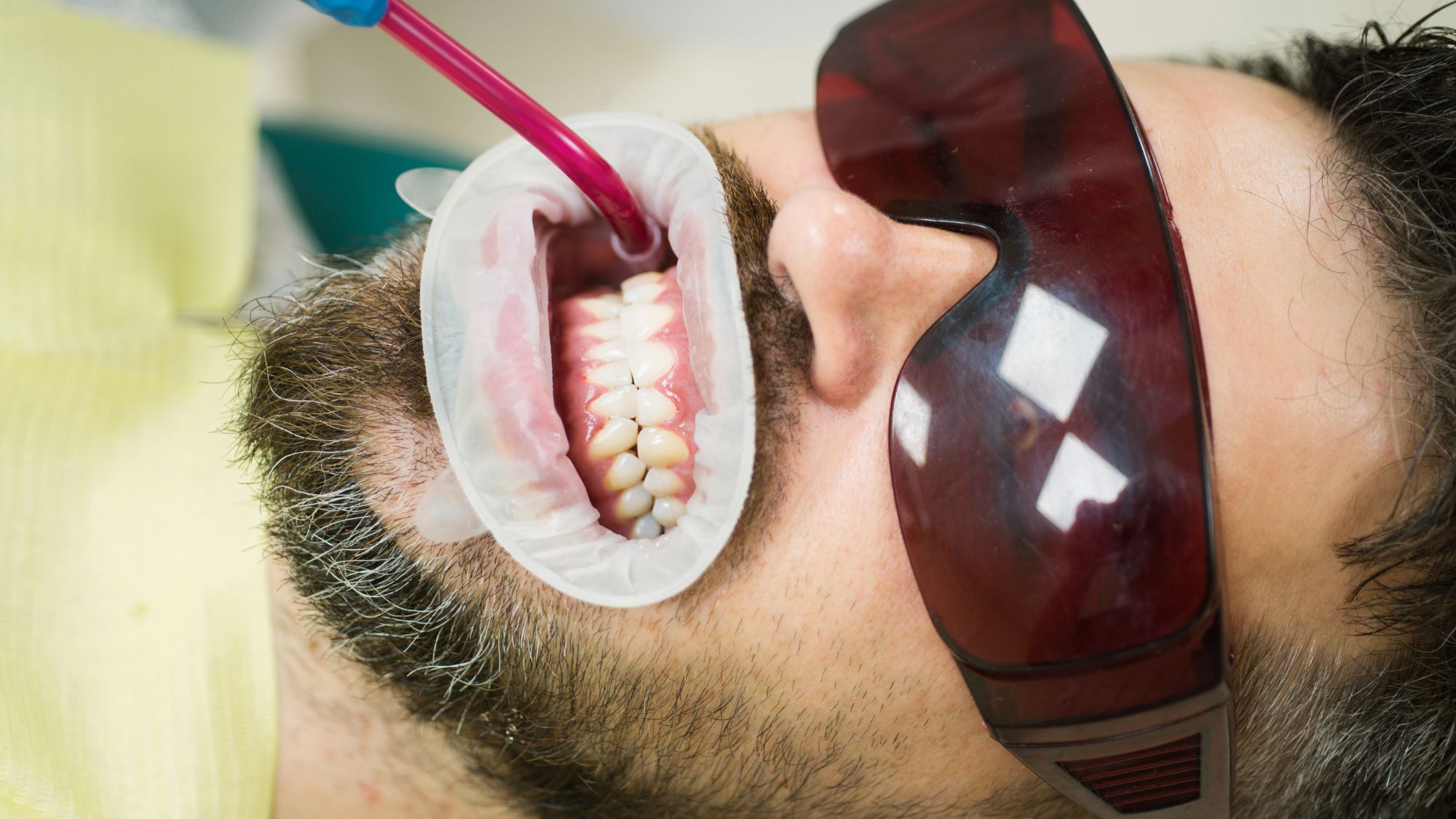
If you’re looking for the fastest and most dramatic results, in-office whitening is usually the gold standard. This is done in an office by professionals using high-concentration peroxide-based bleaching agents. This is usually much stronger than what is available over the counter.
Coffee and tea stains can penetrate quite deeply into the enamel, but the gel used in in-office whitening is an extremely powerful oxidizer that can break down the molecular bonds of even the most resistant stains. Many systems come equipped with an ultraviolet light that accelerates the whitening process, although studies have shown that the high-concentration gel is responsible for the whitening. Getting your teeth professionally whitened ensures that your gums and soft tissues are protected from the chemicals used in the process.
A narrative review published in Wiadomości Lekarskie in 2026 noted that in-office teeth whitening is an effective treatment that can penetrate the enamel and dentin to oxidize pigments. This makes it an extremely reliable treatment for extrinsic discoloration.
2. Custom Take-Home Whitening Trays
If you prefer a more gradual whitening process that you can manage in the comfort of your own home, custom-fitted whitening trays are an excellent, high-authority choice. Unlike one-size-fits-all store-bought options, these trays are created from precise impressions of your teeth.
This custom fit is critical because it ensures the whitening gel stays in direct contact with your teeth while preventing the excess solution from leaking onto your gums. This control minimizes sensitivity and allows you to use a slightly higher concentration of whitening agent than is typically found in retail products. It is a highly effective, controlled approach for tackling coffee-induced staining over several days or weeks.
A randomized clinical trial in the Journal of Clinical and Diagnostic Research confirmed that custom-fitted trays provide long-term effectiveness comparable to other supervised methods while achieving high patient satisfaction.
3. Whitening Toothpaste for Surface Stains
For the average coffee consumer, the easiest solution is whitening toothpaste. However, it is imperative to note that whitening toothpaste does not actually whiten your teeth. Instead, it works by removing surface stains with chemicals such as sodium hexametaphosphate.
If you use whitening toothpaste, you’re actually polishing away the tannin layer that builds up over time. It is not an effective solution if you’re looking to significantly whiten your teeth.
In fact, studies published in the International Journal of Dentistry and Oral Health, accessed via ResearchGate, report that toothpaste containing certain polishing agents has shown significant results in increasing the lightness of coffee-stained teeth.
4. Whitening Strips
Whitening strips have become a household favorite for a reason: they are incredibly convenient and highly effective at lifting surface and mid-level stains. These thin, flexible plastic strips are coated with a peroxide-based gel and are designed to mold to the contours of your teeth.
Because the peroxide is held directly against the enamel for a set duration, they provide more consistent whitening than toothpaste. While they are a great option for many, consistency is key. Most results become visible after several days of regular use.
A comparative clinical study found that home-based whitening systems, including strips, demonstrated high effectiveness and patient acceptance for stain removal.
5. Whitening Pens and Gels
Whitening pens are the ultimate portable solution for active coffee and tea drinkers. These are essentially small, brush-on applicators filled with a concentrated whitening gel. They are not intended for full-mouth whitening but are fantastic for quick touch-ups on visible teeth.
If you are out at a cafe and want to minimize the immediate impact of a cup of tea. Or if you notice a specific area is staining faster than the rest, a quick swipe of a whitening pen can keep your smile bright throughout the day.
This is consistently supported by studies, indicating that peroxide-based gels are an effective means of teeth whitening, with pens being a localized form of this treatment.
6. LED Teeth Whitening Kits
I’m sure you’ve seen these everywhere on social media. They’re kits that contain a gel and an LED light. The science behind this is that the LED light is an accelerant. Helping to speed up the breakdown of the whitening gel (peroxide).
Now, it is true that the gel is the real hero in this treatment, but it is believed that it can be aided by speeding up the chemical process. They’re a popular at-home kit for those who want to use it as a booster. Like those that are sometimes used in dental offices.
While some debate exists on the absolute necessity of light, research in the Journal of Oral Health notes that when used correctly with high-quality gels, LED-assisted systems can provide noticeable color improvement.
7. Professional Dental Cleaning (Scaling and Polishing)
Before you start any intensive whitening, it is vital to have a professional dental cleaning. This process is not just about hygiene; it is a cosmetic foundation. Scaling removes hardened plaque and tartar (calculus) that act like sponges, soaking up coffee and tea pigments.
Once that rough, discolored tartar is removed and the teeth are polished smooth, your smile will immediately look brighter, and any subsequent whitening treatments you choose will be far more effective because the bleaching agents can reach the enamel surface directly.
The Ontario Dental Hygienists’ Association confirms that professional scaling removes extrinsic stains firmly adhered to plaque, which is necessary for effective cosmetic outcomes.
8. Natural Whitening Methods (Use with Caution)
Methods such as baking soda brushing or oil pulling are frequently cited as “natural” ways to whiten teeth. While baking soda is mildly abrasive and can scrub away minor surface stains, it cannot change the tooth’s intrinsic color.
A serious word of caution: Because enamel does not regenerate, overusing abrasive “natural” methods can thin your enamel. Eventually, making the yellow layer beneath (dentin) more visible and increasing your sensitivity. It is best to treat these as occasional cleaning aids only, and never as a primary whitening strategy.
Clinical dental journals warn that the abrasive nature of baking soda can lead to permanent enamel erosion and increased tooth sensitivity when used improperly.
Conclusion: Your Path to a Brighter Smile
When considering options for teeth whitening in Livingston, remember that your choice should depend on the severity of your stains, your sensitivity levels, and your daily lifestyle. Consistency is the secret to a lasting, bright smile. If you are ready to reclaim your confidence, we recommend scheduling an assessment to determine which of these proven methods will best help you achieve your goals safely.
Ready to start? Schedule your professional teeth whitening and cleaning consultation with The Honest Crown today to ensure you’re choosing the safest, most effective path for your smile.