
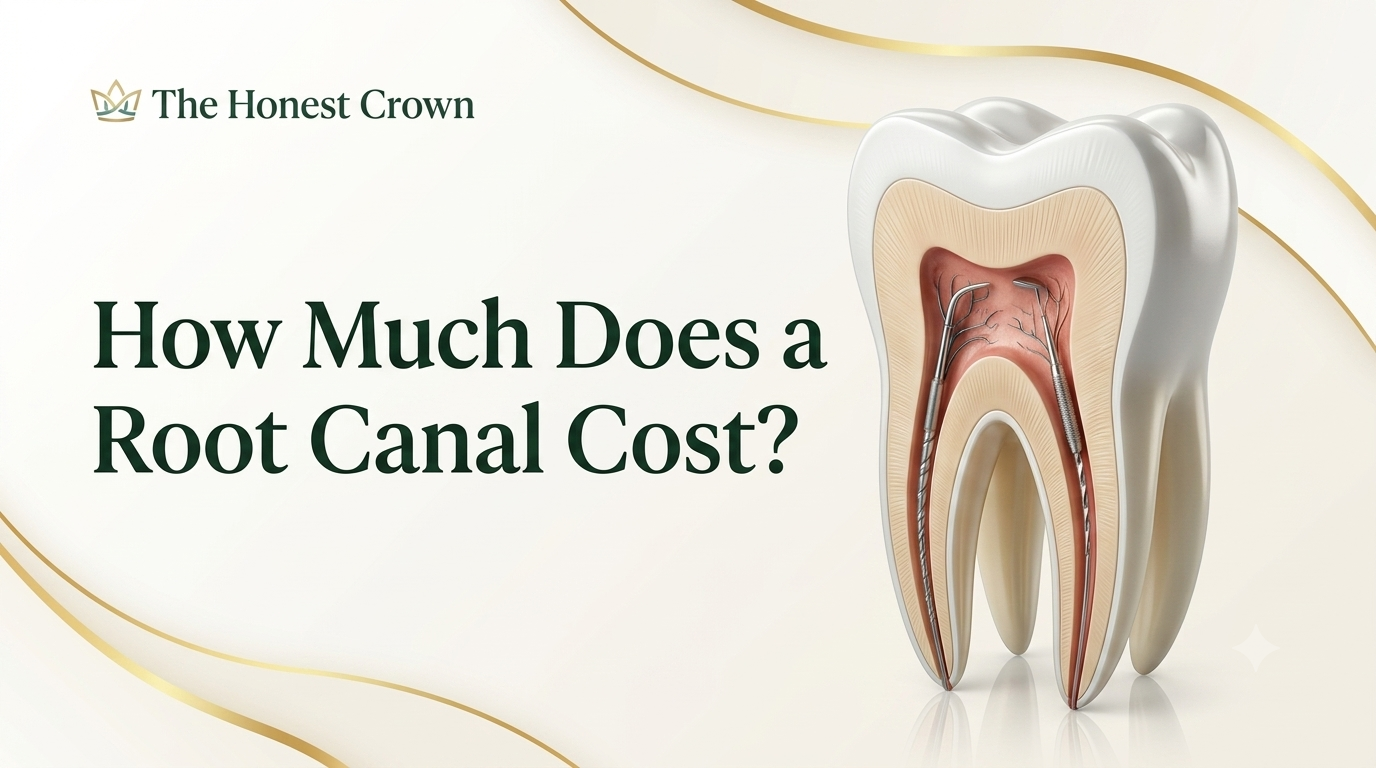
A root canal treatment typically ranges between $500 and $1,800 per tooth and without dental insurance coverage. It’s important to consider the overall care plan when making your budget planning. When a root canal is performed, it does not only involve the cleaning of the tooth; oftentimes there are diagnostic x-rays, consultation fees, and the protective filling or crown placed on top of the tooth following the procedure.
Every smile is unique, which is why you need to get a precise and personalized fee schedule only with a dental exam in person.
Average Root Canal Cost Overview
The average root canal cost usually falls between $700 and $1,500 for the procedure alone. But dental care is no longer one size fits all and the cost goes up and down from office to office and location to location.
Some clinics will give you a single “total price” for the exam, procedure, and the temporary filling. Some charge for each step. Your treatment cost should be quoted as a whole package and usually contains the following:
- Initial examination and specific imaging tests.
- Local anesthesia and comfort management.
- The ongoing root canal treatment procedure.
- A temporary or permanent restoration.
Estimated Root Canal Cost by Tooth Type
Tooth root canal cost varies by tooth location in the mouth. Front teeth are easier, back teeth are harder as they have more roots and canals.
| Tooth Type | Average Cost Range | Why Prices Differ |
| Front Tooth (Anterior) | $776 to 1,911 | Usually has 1 canal and straightforward access. |
| Premolar (Middle Tooth) | $757 to $1,798 | Typically has 1 to 2 canals; moderate complexity. |
| Molar (Back Tooth) | $1,030 to $2,471 | Features 3 to 4 curved canals; takes more time and skill. |
Note: These ranges reflect typical self-pay fees. Actual pricing depends on your clinic and location.
Root Canal Cost by Location
The cost of a root canal can also vary depending on where you receive treatment. Dental fees are generally higher in large metropolitan areas due to increased operating costs, while smaller cities and rural communities may offer lower prices. The experience of the dentist and the complexity of your case can also affect the final cost.
| Location | Typical Cost Range |
|---|---|
| New Jersey | $800–$2,200 |
| New York | $900–$2,400 |
| California | $900–$2,500 |
| Texas | $700–$2,000 |
| Florida | $750–$2,100 |
Note: These are average estimates. Your final treatment cost will depend on the condition of your tooth, the provider, and whether additional procedures such as a dental crown are required.
Why Does Root Canal Treatment Cost Vary?
Price estimates can vary between two patients who go to the same clinic. Knowing the cause of the total endodontic treatment cost will help you to be prepared for no surprises.
The major factors that will impact your fees are:
Location and Anatomy of Teeth: Front teeth have single straight roots making treatment quick. Molars are located at the rear of the mouth, have multiple very narrow roots, and should be thoroughly cleaned using special instruments.
Infection Complexity and Damage: The root canal cost will be higher if the tooth is severely infected, has deep infections or narrow calcified canals and has been previously treated. More time and specialized equipment such as digital 3D imaging is needed in complex cases.
General Dentist vs. Endodontist: An endodontist is a dental specialist that has many years of additional training in saving teeth. Dentists handle routine cases, but more complex and difficult cases are sent to a specialist. Because of their expertise and specialized equipment, endodontists may charge from 20% to 40% more.
Geographic Location: Dentists in bigger metros may have higher overheads, leading to higher charges for services rendered than those in rural areas.
What Can Increase the Cost of a Root Canal?
Several factors can increase the total cost of root canal treatment beyond the standard procedure. Understanding these additional expenses can help you plan your treatment more effectively.
- Retreatment of a previously failed root canal
- Severe infection or dental abscess
- Cracked or fractured teeth
- Emergency dental appointments
- Treatment by an endodontic specialist
- Advanced 3D CBCT imaging
- Additional restorative procedures, such as a dental crown or post placement
The more complex your condition, the more time, technology, and expertise may be required, which can increase the overall treatment cost.
What Is Included in the Cost of Root Canal Treatment?
When reviewing a quote, always ask what is included in the cost of root canal treatment.
Typical procedure estimate will include:
- Local anaesthetic to ensure that you are both numb and at ease
- Use of rubber dam (isolate-draping) to ensure the tooth is clean and dry.
- Pulp tissue will be taken out of the tooth.
- Cleaning, shaping and sealing the canals of the root system
- The placement of a temporary filling
Most of the services, such as initial X-rays, consultation, and permanent crowns, will be listed as separate items.
Additional Costs to Consider Before and After Treatment
To avoid any unpleasant shock, consider all aspects of treatment, from diagnosis to the last tooth restoration.
1. Diagnosis
- Standard X-rays & Exam: $100 – $300
- 3D Imaging (CBCT Scan): $150 – $350 (used for complex cases)
2. Anesthesia and Sedation
In most cases a standard local numbing spray and injections will be included in the procedure fee. For those who suffer from extreme dental fear, nitrous oxide (laughing gas) or oral conscious sedation may be requested and will be an additional $100 to $500.
3. Final Restoration and Crown Costs
A root canal saves the inside of your tooth, but the outer structure remains fragile. Most molars and premolars require a permanent crown after treatment to prevent cracking under daily chewing pressure.
- Permanent Filling: $150 – $400
- Dental Crown: $800 – $1,500+
Your root canal restoration cost is a separate charge from the root canal itself, but it is necessary for long-term health. If you need structural repair options, explore our custom Dental Crown/Restoration solutions to protect your smile.
Root Canal Cost Without Insurance
If you do not have coverage, you are responsible for the entire fee. The total out-of-pocket root canal cost without insurance is $800–$2,500 for a complete exam, root therapy, and permanent crown.
Out of pocket cost breakdown (no insurance):
- Diagnostic Exam & X-rays: $100 to $250
- Root Canal Procedure Fee: $800 to $2,500
- Temporary or Permanent Restoration: $150 to $400
- Dental Crown (if recommended): $800 to $1,500
Ways to Manage Costs Without Insurance
Request an Itemized Estimate: Be sure to get a written estimate before committing to care.
In-House Dental Plans: Several offices provide annual membership which will provide 15% to 30% discounts on major procedures.
Offer Flexible Payment Plans: Implement in-office monthly payment plans or CareCredit.
Health Saving Accounts: Make payments with tax-free funds held in your HSA or FSA accounts.
Root Canal Cost With Insurance
Most dental plans include endodontics as a major service or basic service. The root canal cost with insurance is far less, and most insurance policies will cover 50-80% of the fee for the procedure they have approved for you after you pay your deductible.
Insurance Breakdown Example
- Average Procedure Price: $1,000- $1200
- Annual Deductible: $50
- Amount Subject to Coverage (Price minus Deductible): $950 – $1,150
- Insurance Coverage (80%): Pays $760 – $920
- Your Out-of-Pocket Cost (Deductible + 20% Coinsurance): $240 – $280
Checklist: How to Check Your Coverage
- Check whether endodontics are included in the plan for basic care or major care.
- See if your annual plan maximum has been met.
- Check if your provider is in network for lower rates.
- Ask if the final crown requires a separate pre-authorization.
Root Canal vs. Tooth Extraction: Which Costs More?
At first glance, pulling a tooth looks much cheaper than saving it. But when a tooth is removed, the gap will cause the surrounding teeth to shift and cause major bite issues in the future.When a tooth cannot be saved due to severe damage or infection, our tooth extraction service provides a safe and comfortable solution while helping you plan the best replacement option.
Financial Breakdown: Root Canal vs. Extraction & Replacement
Option 1: Root Canal & Crown
- Upfront Cost: $1,500 – $4,000
- Outcome: Preserves your natural tooth without the need for further surgery.
Option 2: Extraction & Dental Implant
- Upfront Cost (Pulling tooth): $150 – $400
- Replacement Cost (Bridge or Implant): $2,000 – $5,000
- Total Long-Term Cost: $3,150 – $5,400+
An extraction may not cost much initially, but if a bridge or implant must be used in place of the missing space, then extraction will be much more expensive in the long run. Saving your natural tooth with a root canal is almost always the most cost-effective decision. If you’re experiencing severe tooth pain or swelling, learn when to seek immediate treatment by reading our signs you need an emergency dentist immediately guide.
How to Get an Accurate Treatment Estimate
Avoid relying strictly on national online averages. Follow these practical steps to get a clear, accurate price from a local clinic:
- Schedule a Consultation: This will let the dentist get a hands-on look at the tooth. Scheduling an appointment with an experienced dentist Livingston ensures you receive a personalized treatment plan, accurate pricing, and the most appropriate care for your specific dental needs.
- Get Diagnostic Images: Standard X-rays highlight hidden root shapes.
- Ask for a Written Treatment Plan: Request an itemized fee sheet that lists procedure codes, estimated insurance reimbursements and the amount you will be responsible for paying.
- Clarify Restoration: Make sure that the crown is being quoted and that the price of the crown is included in the quote.
Questions to Ask Your Dentist
- Is this quote an all in one quote for the initial exam, X-rays, and numbing?
- Will I need to see a specialist for my tooth type?
- Will the permanent crown be covered or will it have to be ordered separately later?
- What payment terms/financing options do you offer?
What to Expect During the Procedure
Many patients fear root canals due to old myths. Thanks to modern dental techniques, the process feels very similar to getting a standard deep filling.
Step-by-Step Treatment Walkthrough
Step 1 – Numbing: The tooth and gums around it are completely numbed to make for a comfortable pain-free experience.
Step 2 – Clear Infection: The dentist will create a small access hole to get rid of damaged nerve and infected tissue.
Step 3 – Seal Canals: The empty canals are disinfected and rubber-like gutta-percha is used to seal them.
Step 4 – Restore Tooth: This is done by a temporary filling or with a permanent cap placed on the top of the tooth.
Curious about recovery and comfort? Read our full guide on does a root canal hurt?
Does a Root Canal Always Require a Crown?
Not every tooth needs a crown after treatment, but most do. Front teeth that remain structurally strong after cleaning can often be sealed with a simple composite filling. However, molars and premolars endure heavy chewing forces every day. Without a protective crown, a brittle, root-treated back tooth can easily crack, leading to an untreatable fracture.
Your dentist will review your remaining enamel to determine if a protective cap is mandatory.
Can You Delay a Root Canal?
Delaying a root canal can allow the infection to spread deeper into the tooth and surrounding bone. As the infection worsens, treatment often becomes more complex and expensive, and in some cases, the tooth may no longer be saveable. Seeking treatment early usually results in a simpler procedure, faster recovery, and a better chance of preserving your natural tooth.
How to Save Money on Root Canal Treatment
Although root canal treatment is an investment in your oral health, there are several ways to reduce your out-of-pocket costs without compromising quality.
- Compare treatment estimates from reputable dental offices.
- Use your dental insurance benefits whenever possible.
- Ask about in-house membership or discount plans.
- Consider financing options such as monthly payment plans or CareCredit.
- Use HSA or FSA funds if they are available.
- Treat the infection early to avoid more expensive procedures later.
Getting treatment early often costs less than delaying care, as untreated infections can lead to tooth extraction or more extensive restorative treatment.
Frequently Asked Questions
How much does a root canal cost?
The Root Canal Cost ranges between $600 and $1,800+ per tooth for the procedure alone. Total care costs depend on your tooth type, location, and choice of restoration.
How much does a root canal cost without insurance?
The root canal cost without insurance usually ranges from $1,500 to $3,500 for the exam, procedure, and permanent crown.
What is the cost of a root canal if you have dental insurance?
The root canal cost with insurance ranges from $200 to $800, depending on your plan’s deductible, and whether it covers 50% or 80% of endodontic services.
Why is molar tooth root canal more expensive?
Molars may have as many as four curved canals which lie deep within the jaw and which take longer to prepare and require more specialised care and equipment than single rooted front teeth.
Is there a price for the X-rays and anesthetic for the root canal?
Some services include local numbing as part of the primary fee, while initial consultation fees and X-rays are typically shown as line items.
Does the cost of a root canal include a crown?
No. The actual cost of the root canal therapy relates to the clean-up and sealing of the tooth root. A permanent crown is a standalone service and will require a different fee.
Do I always need a crown after a root canal?
Front teeth with minor damage may only need a filling. Back teeth (molars and premolars) almost always need a crown to handle daily chewing pressure safely.
Is a root canal cheaper than tooth extraction?
An extraction is cheaper upfront, but filling the empty gap with an implant or bridge later makes extraction significantly more expensive in the long run.
Is it possible to pay for a root canal in payments?
Yes. Numerous dental offices offer third-party financing options such as CareCredit or have their own payment plans that enable you to divide your balance into smaller, monthly installments.
How can I get an accurate estimate for root canal treatment?
Make an appointment for a physical evaluation of your child’s face with X-rays. Your dentist will need to assess the structure of your tooth in order to give you an accurate breakdown of the cost.
Get a Clear Estimate for Your Care
Understanding your care costs shouldn’t add stress to a toothache. While the root canal price varies based on your tooth type, insurance, and restoration needs, taking action quickly prevents deeper infections and higher future bills.
At The Honest Crown, we believe in transparent pricing, gentle care, and helping you keep your natural teeth for life.
Ready to relieve your pain and protect your smile? Explore our gentle root canal treatment options or call our office today to schedule your personalized evaluation and accurate cost breakdown.