
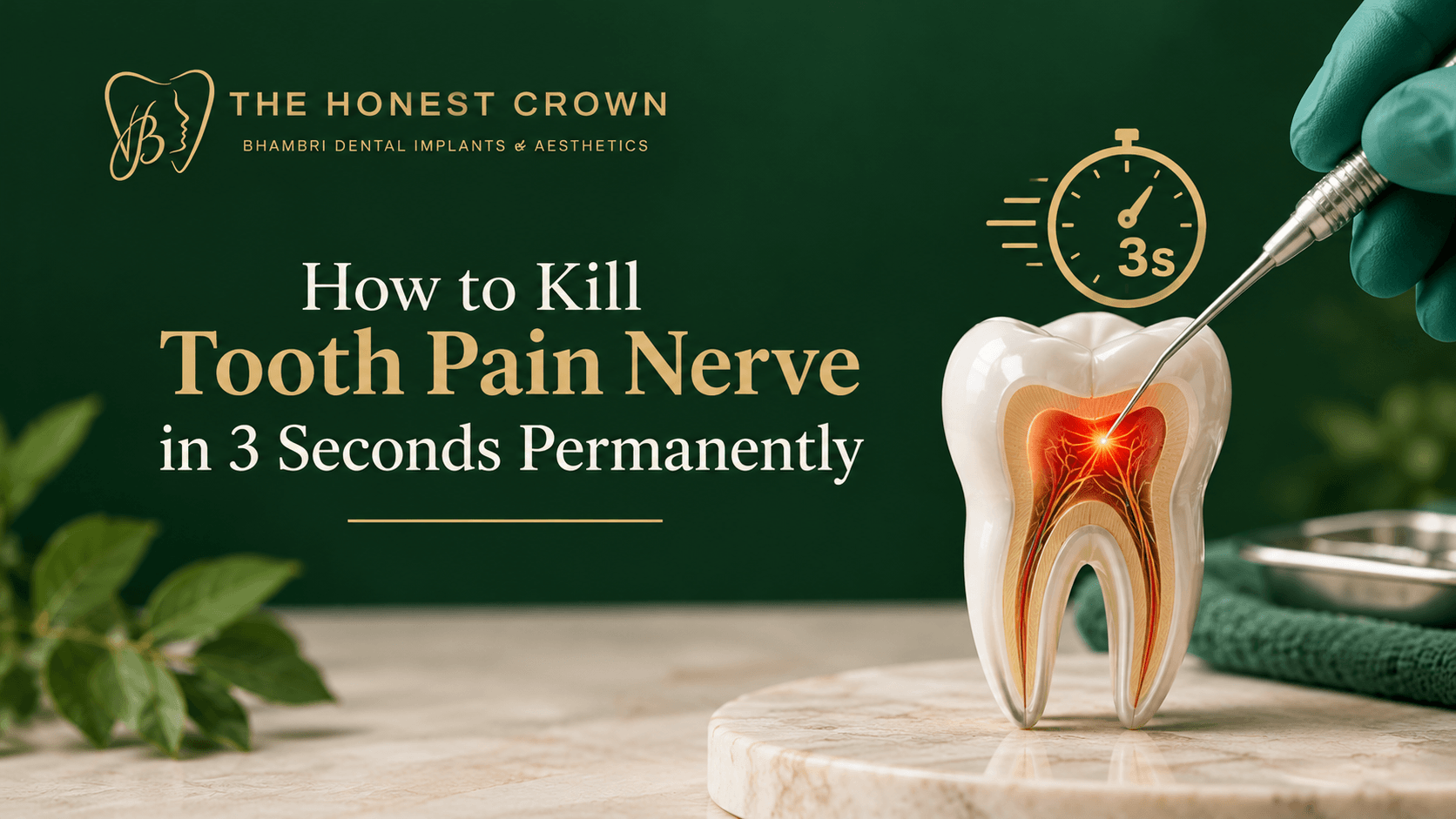
No. You cannot kill a tooth nerve in 3 seconds, and you should not try. No spray, oil, gel, or trick can reach the nerve inside your tooth and remove it for good in that time. Videos that promise this are wrong, and some of the tricks can burn your gums.
The good news is that you can calm tooth pain quickly, often within an hour, and a dentist can end it for good. This guide explains what is really going on inside your tooth, what can give fast relief tonight, and what stops the pain for good.
Why a 3-Second Nerve Kill Does Not Work
A tooth has three layers. Hard enamel covers the outside. Underneath is dentin, which is softer and full of tiny tubes. At the center is the pulp, a soft core made of nerves and blood vessels. This pulp is what hurts.
The pulp is sealed deep inside the tooth. Anything you put on the surface has to pass through enamel and dentin first, and it still cannot remove living tissue. Numbing products only temporarily block pain signals. When they wear off, the nerve is still there, and the cause of the pain is still there too.
Removing a nerve for good requires a dental procedure, local anesthesia, and specialized tools. You can’t do it safely at home.
What Is Actually Hurting in Your Tooth
Nerve pain is a signal, not the real problem. Something is irritating or infecting the pulp.
Deep Decay
A small cavity may not hurt at all. When decay reaches the pulp, bacteria irritate the nerve, causing throbbing pain or sharp pain with hot, cold, or sweet foods.
Cracks and Worn Fillings
A crack or a leaking filling can let bacteria in. Pain that shoots up when you bite down and let go often points to a crack.
Gum and Wisdom Tooth Problems
When gums pull back, they expose the root and cause sharp sensitivity, and some patients first notice gum disease as tender, bleeding gums near the sore tooth. Pain at the very back of the mouth may come from an impacted wisdom tooth.
What Your Type of Pain May Mean
Only an exam and an X-ray can tell you the real cause. Still, the type of pain can give you a hint:
| What You Feel | What It May Mean |
| Quick, sharp zing with cold or sweets that fades fast | Exposed root or a small cavity |
| Constant throbbing ache | Deep decay or an inflamed nerve |
| Sharp pain when you bite and let go | A cracked tooth |
| Dull pressure with swelling or a bump on the gum | An infection or abscess |
Treat this as a guide only. Two different problems can feel almost the same.
How to Get Fast Tooth Pain Relief Tonight
None of these steps kills the nerve. They only make the wait easier. Try them in this order:
- Take an over-the-counter pain reliever. The American Dental Association recommends non-opioid medicines like ibuprofen, alone or with acetaminophen, as the first choice for dental pain. Follow the label. Ask a pharmacist or doctor first if you have stomach, kidney, or liver problems, take blood thinners, or are pregnant.
- Use a cold compress. Hold it on the outside of your cheek for 15 to 20 minutes, then take a break. Cold calms swelling and dulls pain.
- Rinse with warm salt water. It cleans food and bacteria from around the tooth. Swish gently and spit.
- Keep your head up. Lying flat sends more blood to your head and can make the throbbing worse, so prop up your pillow.
- Skip the triggers. Avoid very hot, cold, sweet, or hard foods, and chew on the other side.
- Floss gently around the tooth. Trapped food can cause pain that feels like a nerve problem.
Some people also try clove oil for short-term numbing. Never use it undiluted, because it can irritate or burn your gums and won’t help a tooth infection. A salt rinse and a pain reliever are the safer choices.
Home Tricks to Avoid
Online “nerve-killing” tips can make things worse. Do not:
- Put an aspirin tablet on your gum or tooth. It can burn the gum tissue.
- Use rubbing alcohol, bleach, nail polish remover, or any strong chemical in your mouth.
- Poke the tooth with a pin or sharp tool.
- Use heat on a swollen cheek. It can increase swelling.
- Wait for weeks because a remedy “worked” once.
Why Sudden Relief Can Be a Warning Sign
Here is something many people do not know. If a tooth hurts badly for days and then suddenly goes quiet, that is not always good news. The nerve may have died. A dead nerve does not feel pain, but the infection inside the tooth can keep growing.
Left alone, bacteria can spread out of the root tip and form an abscess, a pocket of pus in the bone or gum. That is why a quiet tooth still needs an X-ray.
What a Dentist Does to Stop Nerve Pain for Good
Here is the closest thing to a fast, real fix. A dentist can numb your tooth in a few minutes. After that, the pain is gone during treatment. What happens next depends on the cause.
Root Canal
Root canal treatment removes the sick or dying nerve while keeping the tooth. The dentist numbs the area, opens the tooth, takes out the pulp, cleans the inside, and seals it. Most teeth then get a crown for protection. Most people feel pressure, not sharp pain, because the area is numb. Many root canals are finished in one or two visits.
The pain stops because the infected nerve is gone. According to root canal specialists (endodontists), this treatment is one of the most common ways to save a tooth that would otherwise be lost. Success rates are high, and often around 90 percent or better.
Cost matters too. At around $500 to $1,800 per tooth, a root canal is often cheaper than losing the tooth and replacing it later. You can compare numbers in our root canal cost guide.
Tooth Extraction
If a tooth is cracked below the gum line or too damaged to rebuild, removing it can also end the pain. Tooth extraction is usually the last choice, and your dentist can discuss replacement afterward.
Filling or Crown
If decay has not reached the pulp, or the nerve is only irritated, a simple filling or crown may calm the tooth down. That is why an exam comes first. Not every toothache needs a root canal.
Signs You Need Care Today
Do not wait for your next free slot if you have any of these:
- Pain that wakes you up or keeps getting worse
- Swelling in your face, cheek, or jaw
- A fever with tooth pain
- A pimple-like bump on the gum, or a salty or bad taste
- Pain that spreads to your ear, jaw, or neck
- Trouble opening your mouth
An emergency dentist can often see you the same day, and new patients can get a $99 emergency exam and X-ray at The Honest Crown. If you have trouble breathing or swallowing, or swelling that is spreading toward your eye or neck, go to the nearest emergency room right away.
How to Keep Nerve Pain From Coming Back
Most nerve pain starts as a small, missed problem. A few habits lower your risk a lot:
- Brush twice a day with fluoride toothpaste and floss once a day.
- Cut back on sugary snacks and drinks, which feed cavity bacteria.
- Wear a night guard if you grind your teeth.
- Fix small cavities and worn fillings early, before they reach the nerve.
- Keep up with dentist visits so they catch problems early, when they’re still small and cheap to treat.
Quick Answers About Tooth Nerve Pain
How long does tooth nerve pain last?
It depends on the cause. A cold sensitivity may last seconds. Deep decay or infection can ache for hours or days. Pain that lasts more than a day or two needs a local dentist in Livingston.
Can tooth nerve pain go away on its own?
It can fade for a while, but the cause rarely heals on its own. A cavity or crack won’t repair itself, so the pain usually returns.
Is ice or heat better?
Ice is better. A cold compress calms swelling, while heat can make it worse.
Does a root canal hurt?
With local anesthesia, most people feel pressure rather than sharp pain. The treatment is meant to take pain away, not add to it.
Final Thoughts
There is no way to kill a tooth nerve in 3 seconds, and the tricks that claim to can hurt you. What works is simple: ease the pain safely tonight, then get the cause treated so the pain does not come back.
If a tooth hurts, our team at the Livingston dental clinic can find the cause and explain your options and costs before any treatment starts. Call (973) 821-0030 or book an appointment at 201 S Livingston Ave, Suite 2A, Livingston, NJ.