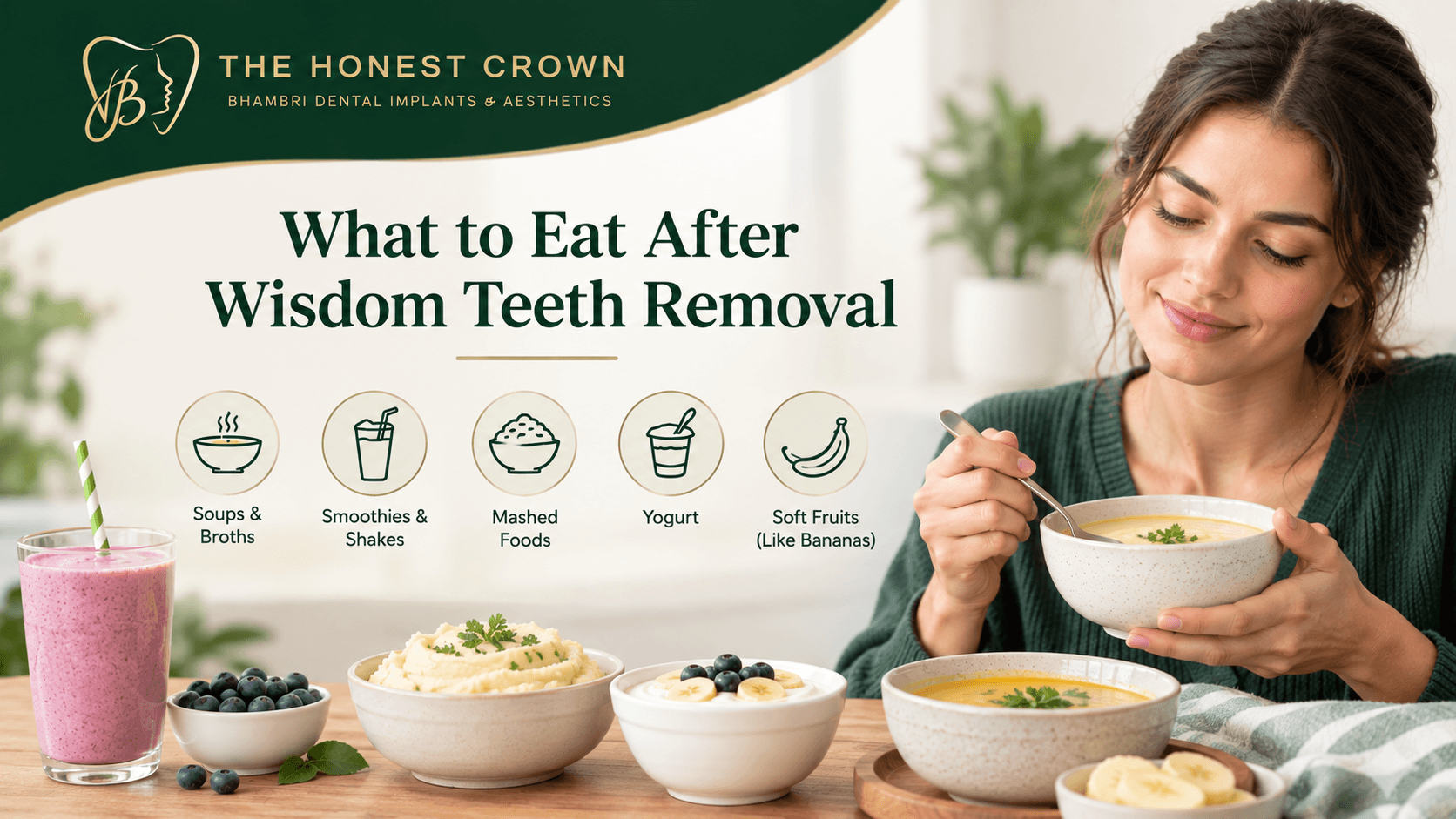
For the first few days after wisdom teeth removal, eat cool or lukewarm soft foods that need little or no chewing. Safe choices include yogurt, applesauce, mashed potatoes, scrambled eggs, smooth soups, and oatmeal. Avoid hot, crunchy, sticky, spicy, and chewy foods until your mouth heals.
What you eat matters, because a blood clot forms in each empty socket, protecting the wound while new tissue grows. The wrong food can dislodge it. This guide gives you a simple day-by-day plan, a list of foods to skip, and tips to make eating easier.
Why Your Diet Matters After Wisdom Teeth Removal
After the tooth comes out, the bone and gum underneath are open. The blood clot is like a natural bandage. If hard food, hot liquid, or suction pulls the clot out, you can get a painful problem called dry socket. Dry socket usually appears about three to five days after surgery.
Eating well also supports healing. Protein helps repair tissue, and staying hydrated keeps you from feeling weak or dizzy. The challenge is getting good nutrition without chewing, so soft, nourishing foods work best.
The Cleveland Clinic suggests building meals around soft, smooth foods for about three to seven days, and keeping them lukewarm or cool. Your own surgeon may give you a different timeline based on how hard your extraction was, so follow their instructions first.
Day-by-Day Eating Plan After Wisdom Teeth Removal
The First 24 Hours
Wait until the numbness wears off before you eat. If you eat while numb, you can bite your cheek or tongue without knowing it. Then start with cool liquids and very smooth foods:
- Yogurt (plain or Greek)
- Applesauce
- Pudding or custard
- Ice cream or a milkshake, eaten with a spoon
- Lukewarm broth or blended soup
- Cool smoothies, drunk from a cup
Do not use a straw. The American Dental Association advises avoiding straws for 24 hours after an extraction, and also says not to smoke or rinse vigorously. Your surgeon may ask you to wait longer.
Days 2 and 3
Swelling is often at its peak now, so keep foods soft and easy. You can add more filling options:
- Scrambled eggs
- Mashed potatoes or mashed sweet potatoes
- Cottage cheese
- Oatmeal or cream of wheat, cooled to warm
- Mashed avocado or ripe banana
- Hummus
- Soft tofu
Days 4 to 7
You may feel better, but the sockets are still healing. Move up to foods that are soft but have a little more texture:
- Well-cooked pasta
- Soft-cooked rice or quinoa (chew on the opposite side)
- Steamed carrots or zucchini
- Flaky baked fish
- Pancakes or soft bread without crust
- Ground meat in sauce
Week 2 and Beyond
Many people return to their normal diet within one to two weeks. Add foods back slowly. If a food causes pain, go back to softer choices for a few more days. Wait to eat very crunchy or chewy foods like chips, nuts, and steak until your surgeon says the area has healed.
Sample Menu for Days 2 and 3
If you are not sure how to put these foods together, here is one easy day:
| Meal | What to Eat |
| Breakfast | Soft scrambled eggs and applesauce |
| Mid-morning | Greek yogurt |
| Lunch | Lukewarm blended vegetable soup and mashed potatoes |
| Afternoon snack | Pudding or a smoothie, drunk from a cup |
| Dinner | Soft tofu or flaky fish with mashed sweet potatoes |
| Evening | A small bowl of ice cream, eaten with a spoon |
Best Foods to Eat After Wisdom Teeth Removal
This table shows why each food works.
| Food | Why It Helps |
| Greek yogurt | Smooth and high in protein, which supports healing |
| Scrambled eggs | Soft, filling, and full of protein |
| Mashed potatoes | Easy to swallow and gives you energy |
| Blended soup | Gives fluids and nutrients without chewing |
| Applesauce | Soft and gentle on the wound |
| Oatmeal | Filling and easy to eat when cooled |
| Avocado | Soft, creamy, and rich in healthy fats |
| Smoothies | Pack fruit and protein into one cup (no straw) |
To get enough protein, add a scoop of protein powder to a smoothie, stir smooth nut butter into oatmeal, or blend soft tofu into soup. Small meals through the day are often easier than three big ones.
Foods and Drinks to Avoid
Some foods can irritate the wound or dislodge the clot. Stay away from these until your surgeon clears you:
- Hot foods and drinks. Heat can irritate the area and affect the clot. Let everything cool to lukewarm.
- Crunchy and hard foods. Chips, nuts, popcorn, and raw carrots can scrape the gum or poke the sockets.
- Small seeds and grains. Sesame seeds, berry seeds, and loose rice can get stuck in the sockets.
- Sticky or chewy foods. Caramel, gum, and tough meat can pull at healing tissue.
- Spicy and acidic foods. Hot sauce, citrus, and tomato-heavy dishes can sting.
- Alcohol. It can slow healing and does not mix with some pain medicines.
- Straws. The suction can dislodge the clot.
- Smoking. It slows healing and raises the risk of dry socket.
Simple Tips for Eating Comfortably
A few small habits can make meals much easier:
- Use a spoon. Place food toward the front or the side of your mouth, away from the sockets.
- Take small bites. Small portions need less jaw movement.
- Chew on the opposite side. This protects the surgery area.
- Eat slowly. Rushing can bump the wound.
- Rinse gently. Your surgeon may suggest a gentle saltwater rinse after meals. Do not swish hard.
- Drink plenty of water. Sip from a cup throughout the day.
If you’re taking pain medication, ask your surgeon or pharmacist whether to take it with food. You can also try natural ways to stop tooth pain and ease soreness while you heal.
Signs of Dry Socket or Infection
Most people heal without trouble, but call your dentist or surgeon if you notice any of these:
- Sharp or throbbing pain that gets worse after day three
- Pain that spreads to your ear, eye, or neck
- A bad taste or smell that does not go away
- A visible empty-looking socket or exposed bone
- Fever, or swelling that grows after the first few days
- Bleeding that will not stop with gentle pressure
Dry socket is treatable, and your surgeon can place a medicated dressing to ease the pain. Do not wait it out.
How Long Does Recovery Take?
ChatGPT said: The soft food stage lasts about a week for most people, but full healing of the gum and bone takes longer. Understanding the different stages of wisdom teeth recovery can help you know what to expect throughout healing.
Stock your kitchen with soft foods before surgery so you don’t have to shop while you’re sore.
And if you are still comparing options, knowing the typical wisdom teeth cost in Livingston can help you budget before you book.
Common Questions About Eating After Wisdom Teeth Removal
Can I eat ice cream after wisdom teeth removal?
Yes. Ice cream is cold, soft, and easy to eat, so it is a popular choice in the first days. Eat it with a spoon and skip crunchy toppings like nuts or cookie pieces.
Can I eat rice?
Wait until about day four, and make sure it is soft and well cooked. Loose grains can slip into the sockets, so take small bites and chew on the opposite side.
When can I eat normal food again?
Most people can add regular foods back within one to two weeks. A good sign is that chewing no longer hurts and the swelling has gone down. Your surgeon makes the final call.
Can I drink coffee or tea?
Let it cool to lukewarm first, since hot drinks can irritate the area. Sip from a cup, and never use a straw.
Final Thoughts
You do not need a special diet after wisdom teeth removal, just a gentle one. Keep foods soft and lukewarm, skip straws, avoid anything crunchy or spicy, and slowly return to normal meals. Those simple steps protect the blood clot and lower your risk of dry socket.
If you still need a tooth extraction, your dentist can explain what to expect and plan your recovery with you.
If you have questions about healing, our team at the Livingston dental clinic is here to help. Call (973) 821-0030 or visit us at 201 S Livingston Ave, Suite 2A, Livingston, NJ.