Many people assume that brushing regularly automatically means brushing correctly. Unfortunately, this is not always the case. Brushing in the wrong direction can be quietly detrimental to the enamel and gums, as well as lead to the buildup of tartar and plaque. Over time, even minor mistakes in brushing technique can increase the risk of cavities, gum recession, and periodontal disease.
In this ultimate guide, we will take you through the science of brushing, the mistakes that can put your oral health at risk, and the best techniques recommended by leading health professionals. Our goal is to empower you to protect your smile with practical, medically sound knowledge that is easy to apply daily.
Why Brushing Technique Matters for Long-Term Oral Health
Oral health is the gateway to your overall health. When you brush your teeth, you are not simply removing food particles; you are dealing with a biofilm. A biofilm is a complex community of bacteria that adheres to your teeth. If not properly disrupted every 12 to 24 hours, these bacteria will produce acids that dissolve enamel and toxins that irritate the gum tissue.
The Consequences of Poor Technique:
- Tooth Decay: Plaque left in the grooves of molars or between teeth creates areas of decay.
- Gingivitis and Periodontitis: When bacteria sit at the gumline, your body triggers an inflammatory response. Over time, this inflammation destroys the bone supporting your teeth.
- Enamel Erosion: Using too much pressure (attrition) thins the enamel, exposing the yellowish dentin underneath.
Research has increasingly linked chronic gum inflammation to heart disease, diabetes, and even Alzheimer’s.
Signs You Might Be Brushing the Wrong Way
How do you know if your technique is failing? Your body provides clear indicators. One of the most common signs is gingival recession. If your teeth look “longer” than they used to, or if you notice a notch at the base of a tooth, you are likely brushing too hard.
Another sign is localized teeth sensitivity. If a specific area of your mouth hurts when you brush or drink cold liquids, it may be because you are over-focusing your brushing energy on that spot, which can wear down the protective enamel.
Furthermore, if your toothbrush bristles look splayed or flattened after only a month of use, you are applying far too much force. Healthy brushing should keep the bristles relatively straight throughout the brush’s full three-month lifespan.
The Mayo Clinic identifies receding gums and persistent bad breath (halitosis) as primary symptoms of inadequate oral hygiene and early-stage gum disease.
The Correct Way to Brush Your Teeth (Step-by-Step)
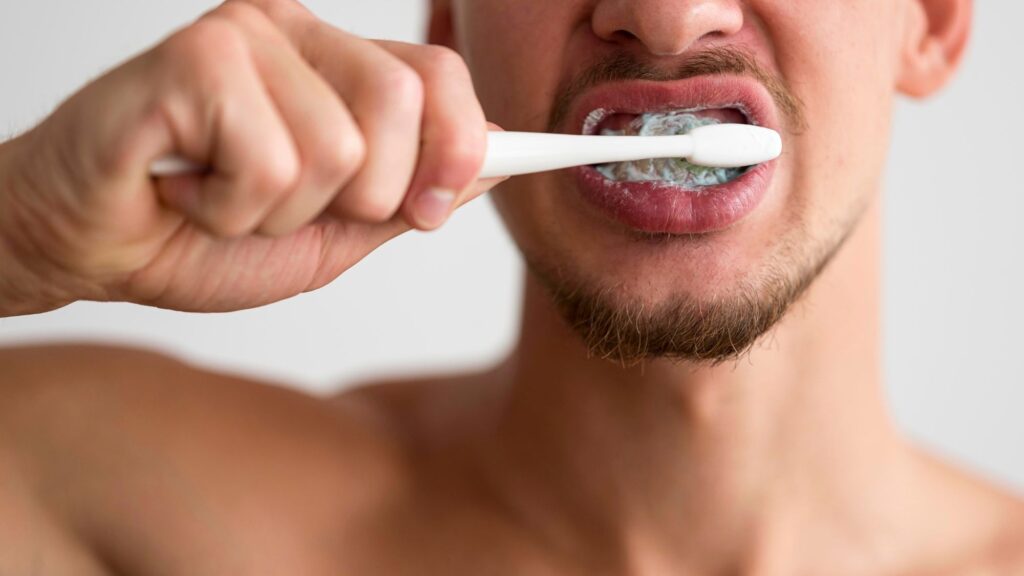
To brush like a professional, you need to move away from the “back-and-forth” scrub. Most dentists recommend the Modified Bass Technique.
The Angle: Hold your brush at a 45-degree angle toward the gumline. This allows the bristles to reach slightly under the gum margin, where bacteria hide.
The Motion: Use short, gentle, circular or “vibratory” motions. Think of it as massaging the teeth rather than scrubbing them.
The Surface Check: Brush the outer surfaces, the inner surfaces (tilt the brush vertically for the front teeth), and the chewing surfaces.
The Duration: You must brush for at least two full minutes. Most people spend only 45 seconds, leaving 50% of the plaque behind.
Don’t Forget the Tongue: Your tongue acts like a carpet for bacteria. Gently brush it or use a tongue scraper to eliminate bad breath.
Research cited by Cochrane Library indicates that systematic brushing techniques, particularly when combined with soft bristles, significantly reduce the incidence of gingival abrasion compared to horizontal scrubbing.
Common Brushing Mistakes That Damage Your Teeth
Even with good intentions, several common habits can sabotage your progress. One of the biggest mistakes is brushing immediately after eating acidic foods (like oranges, soda, or coffee). Acid softens the enamel; if you brush right away, you are literally brushing the softened enamel off your teeth. It is better to rinse with water and wait 30 to 60 minutes.
Other mistakes include:
- Using a Hard Brush: Medium- and hard-bristled brushes are rarely recommended by dentists, as they are too abrasive for gum tissue.
- Skipping the Gumline: Many people only brush the white part of the tooth, ignoring the pink area where disease actually starts.
- Neglecting Floss: Brushing cleans the front and back, but flossing is the only way to clean the sides.
Manual vs. Electric Toothbrush: Which Is Better?

This is the age-old question. While you can do an excellent job with a manual brush, clinical studies show that electric toothbrushes (specifically oscillating-rotating models) tend to remove more plaque.
Electric brushes are particularly helpful for people with limited dexterity or those who tend to brush too hard. As many models feature pressure sensors that light up when you press too hard. However, the tool is only as good as the hand holding it. If you use an electric brush but skip the gumline, you still won’t see the benefits.
A landmark study by the Oral Health Foundation found that users of electric toothbrushes had 22% less gum recession and 18% less tooth decay over an 11-year period.
When to See a Dentist About Brushing Concerns
At-home care is half the battle, but even the best brusher can’t remove tartar once it has calcified. This is where professional intervention becomes necessary. If you experience persistent gum bleeding, “wiggly” teeth, or chronic bad breath despite improving your technique, you may need a deeper evaluation.
Professional checkups enable early detection of invisible issues. Regular maintenance ensures that your at-home efforts aren’t undermined by underlying issues such as a cracked filling or a deep periodontal pocket. If you are concerned about your current oral health. Seeking out teeth cleaning services can provide the “reset” your mouth needs to stay healthy.
Final Thoughts
Taking care of your teeth shouldn’t feel like a guessing game. By simply adjusting your angle and lightening your pressure, you can transform a basic chore into a powerful preventative habit. Remember, consistency is key, but technique is what truly saves your enamel and keeps your gums healthy for the long haul. You’ve got the tools and the knowledge now. It’s just about putting them into practice. Ready to ensure your smile is on the right track? The Honest Crown is here to help you achieve your best oral health.