
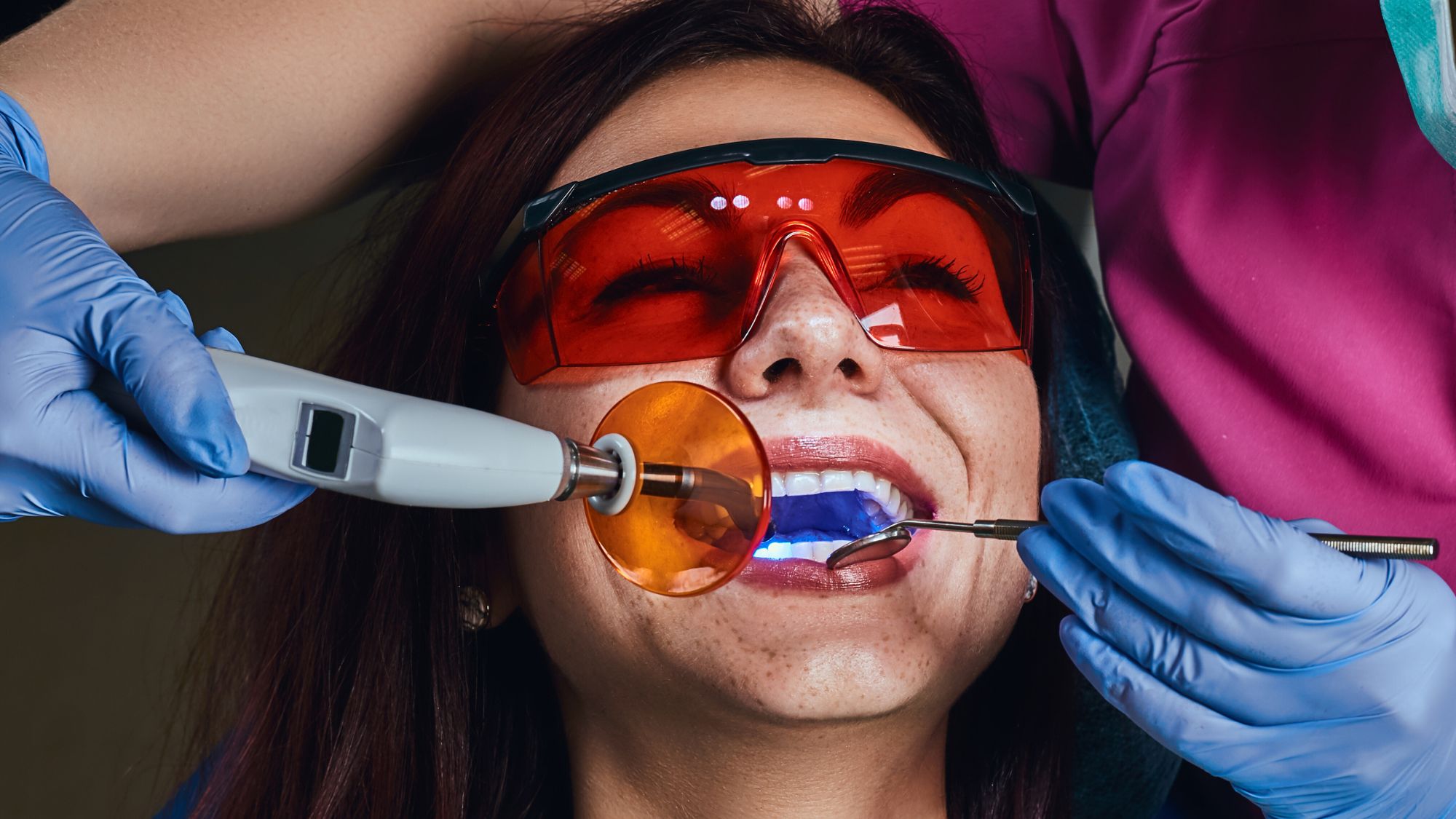
If you’ve been staring at your teeth in the mirror, wondering why they still look yellow even after brushing, you’re not alone. Many people get stuck choosing between DIY whitening kits and professional teeth whitening.
While home kits may seem cheaper and easier, professional treatment is usually the better option because it works faster, yields more even results, and is safer. In this blog, we’ll break down both options so you can decide what’s truly right for your smile.
Professional Teeth Whitening Cost in Livingston and Its Value
In Livingston, the cost of professional teeth whitening typically ranges from $300 to $800. This price varies depending on factors such as the dental clinic, treatment type, and technology used. While DIY teeth whitening kits appear to be more affordable, they often do not offer the same level of effectiveness or long-lasting results as professional treatments.
Dentists use stronger bleaching agents and customized treatments to achieve more noticeable and lasting results. Though the initial cost may seem higher, it provides value in terms of safety, effectiveness, and the overall results you can expect.
Why Choose Professional Teeth Whitening Over DIY Kits?
- Effectiveness: Professional whitening delivers faster, more noticeable results than DIY options.
- Safety: Dentists ensure treatments are done safely, avoiding gum damage or sensitivity.
- Customization: Professional treatments are tailored to your specific needs for optimal results.
Comparison Chart: Professional Teeth Whitening vs. DIY Kits
| Feature | Professional In-Office | DIY/OTC Kits |
|---|---|---|
| Speed | 1 Visit (approx. 1 hour) | 2–4 Weeks of daily use |
| Shade Change | Significant (3-8 shades) | Minimal (1-2 shades) |
| Safety | High (Custom protection) | Moderate (Risk of burns/sensitivity) |
| Cost | High ($$$) | Low ($) |
| Longevity | 1-3 Years | 3-6 Months |
| Customization | High (Tailored gel strength) | None (One-size-fits-all) |
Why So Many People Are Confused About Teeth Whitening
Teeth whitening is one of the most marketed cosmetic dental treatments in the world. Social media influencers promote charcoal powders. Online stores sell countless whitening strips and pens. At the same time, dental clinics are promoting sophisticated, costly clinical whitening systems. The information provided appears inconsistent with the exaggerated claims.
Some of this confusion stems from a lack of understanding of how stains develop. In any case, teeth discoloration is divided mainly into two types:
Extrinsic stains: These include surface stains such as those due to coffee, tea, red wine,
Intrinsic Stains: Stains deeper within the tooth structure, such as those resulting from aging, trauma, or drugs.
Different whitening techniques have varying effects on different types of stains. Many over-the-counter products address only surface staining, while clinical treatments penetrate the enamel more effectively.
According to the American Dental Association (ADA), peroxide-based bleaching agents are the most scientifically supported method for lightening tooth color. Understanding this difference is the first step toward choosing the better option.
What Is Professional Teeth Whitening?
Professional treatments are carried out under the direct supervision of a licensed dentist or hygienist. This is to ensure that the treatment is tailored to the individual’s needs and status, rather than applied universally.
How It Works
The process generally entails several crucial stages, which have the objective of ensuring that outcomes are maximized while risks are minimized:
- High-concentration whitening gel: The dentist will use a significantly stronger whitening agent, typically hydrogen peroxide, at 25% to 40% concentration. It has a greater capability to break down stain molecules than at-home products.
- LED/light-activated systems (if applicable): While the gel does the heavy lifting, special lights can speed up the process by activating peroxide.
- Gum protection and isolation: This may be the most critical point of all. The dentist applies a protective barrier to the gums and soft tissues to prevent chemical burns from the high-concentration gel.
- 60–90-minute in-office process: The entire treatment is completed in a single appointment, allowing for immediate, dramatic results.
Who Performs It
This treatment is performed by a licensed dentist or a dental hygienist who has been specifically trained to apply these concentrated agents.
Results You Can Expect
Patients can typically expect their teeth to become 3 to 8 shades lighter in just one session, providing a dramatic, instantly noticeable change.
What Are DIY Teeth Whitening Kits?
DIY kits are convenient, allowing people to whiten their teeth at home without scheduling a dental appointment.
Types of DIY Kits
- Whitening strips: Thin, flexible plastic strips impregnated with a low-concentration peroxide gel applied directly to the teeth.
- Whitening pens: A small, brush-tipped pen used to paint a peroxide gel directly onto the teeth for spot treatments.
- Trays with gel: These are generic plastic trays filled with whitening gel and not fitted to the individual user’s teeth.
- Charcoal and home remedies: Those containing abrasive elements, such as activated charcoal or baking soda, that physically scrub surface stains but may be highly damaging to the enamel if overused.
How Do They Work
DIY kits contain much lower concentrations of active ingredients (typically less than 10% hydrogen peroxide or carbamide peroxide) than professional teeth whitening treatments. The process involves applying it consistently over several days or weeks to slowly oxidize surface stains.
Typical Results
Results with DIY kits tend to be gradual and modest; one might expect teeth to whiten by 1 to 2 shades over several weeks. These are best used for mild or surface-type staining and do not work well on deeper, intrinsic discoloration.
Side-by-Side Comparison: DIY vs Professional Teeth Whitening
When evaluating your options, it is helpful to compare the key factors of each method.
| Feature | Professional In-Office | DIY/OTC Kits |
| Speed | 1 Visit (approx. 1 hour) | 2–4 Weeks of daily use |
| Shade Change | Significant (3–8 shades) | Minimal (1–2 shades) |
| Safety | High (Custom protection) | Moderate (Risk of burns/sensitivity) |
| Cost | High ($$$) | Low ($) |
| Longevity | 1–3 Years | 3–6 Months |
| Customization | High (Tailored gel strength) | None (One-size-fits-all) |
Is Professional Teeth Whitening Safer?
The safety profile of professional treatment is significantly higher because it is overseen by a trained dental professional. Before any whitening, a dentist will perform a comprehensive oral exam to check for underlying issues such as cavities, gum disease, or severe enamel erosion. If these are not addressed first, whitening gel can cause severe pain and permanent damage.
Research confirms that dental supervision reduces the incidence of adverse effects such as gingival irritation and tooth sensitivity because the dentist can adjust the whitening agent’s concentration and application method based on the patient’s individual tooth anatomy.
Furthermore, custom-fitted trays or meticulous gum protection used in a dental office ensure that the highly concentrated bleach contacts only the tooth enamel, protecting the sensitive gum tissue from chemical burns and reducing the risk of severe tooth sensitivity.
Why DIY Kits Sometimes Fail
Despite their popularity, DIY kits often fail to deliver the desired results for several reasons, including a lack of professional customization and control.
- One-size-fits-all trays: General trays do not match the shape of a person’s mouth and do not provide even coverage, leading to gel leaking onto the gums.
- Lack of proper gel distribution: Without a professional applicator, it is difficult to distribute the gel evenly to cover all tooth surfaces.
- Low active ingredient concentration: Whitening agents are typically low, making them ineffective at removing stubborn stains.
- Inconsistent application: Leaving it up to the user to adhere to a rigid weekly schedule can lead to skipped applications.
- Lack of dental supervision: Without a dentist’s supervision, the user might not whiten long enough or over-whiten, causing enamel damage and increased tooth sensitivity.
Cost Comparison: Is Professional Whitening Worth It?
The upfront cost of a professional treatment is higher, often ranging from several hundred to over a thousand dollars. Conversely, DIY kits are very affordable, often costing less than $50. However, the true value lies in the long-term results.
Professional teeth whitening can have longer-lasting results, one to three years, depending on personal habits like coffee drinking or smoking, while at-home results may last three to six months.
When considering the value of ongoing purchases required to maintain the treatment’s effects over a long period, the financial disparity between the two is diminished. To gain instant gratification to prove a point for a major occurrence in a person’s life, the speed and effectiveness of professional treatment may far outweigh the initial expense.
Who Is a Good Candidate for Professional Whitening?

Professional whitening treatments are best for those who want quick, surefire, and deep results. Professional treatments particularly suit those who:
- Patients with substantial extrinsic discoloration due to dietary habits (coffee, red wine, etc.) or smoking.
- Individuals who require preparation for a given occasion, such as a wedding or a job interview. They require immediate results.
- People who have attempted DIY kits before but failed.
- Those with healthy teeth and gums who desire the brightest, safest smile possible.
Teeth whitening does not affect other prosthetic appliances, such as crowns, bridges, and fillings, which might need replacement to match the newly colored teeth. It is essential to identify individuals for teeth-whitening treatments by examining them for the absence of decay and periodontal disease, since applying teeth-whitening agents to decayed teeth may cause sensitivity and pain.
Dentist’s Recommendation: What We Suggest for the Best Results
Ultimately, the best choice depends on your budget, time frame, and the severity of discoloration. Safety-wise, though, professional whitening is the better option: it includes a dental checkup, customized treatment, and dramatic results in a fraction of the time.
For minor maintenance or for those with very mild discoloration on a constrained budget, at-home kits can be a reasonable alternative, provided they are used exactly as instructed and after consulting a dentist. To determine the right avenue for you, a consultation with the experts at The Honest Crown is the best next step to have your oral health assessed and discuss your aesthetic goals.
FAQs
1- How much does professional teeth whitening cost?
Professional teeth whitening costs between $300 to $800 in Livingston, depending on the treatment.
2- How long does professional teeth whitening last?
Results can last anywhere from 1 to 2 years, depending on lifestyle and oral hygiene.
3- Is professional teeth whitening safe?
Yes, professional teeth whitening is safe when done under a dentist’s supervision.
4- Does professional teeth whitening hurt?
It might cause mild sensitivity, but it usually goes away within a day or two.
5- Is professional teeth whitening worth it?
Yes, it offers faster, longer-lasting results than over-the-counter kits.
6- Does professional teeth whitening damage enamel?
No, professional treatments are designed to be gentle on enamel and carry minimal risk.
7- When can I brush my teeth after professional teeth whitening?
You can brush your teeth right after the treatment, but use a soft brush and non-abrasive toothpaste.