
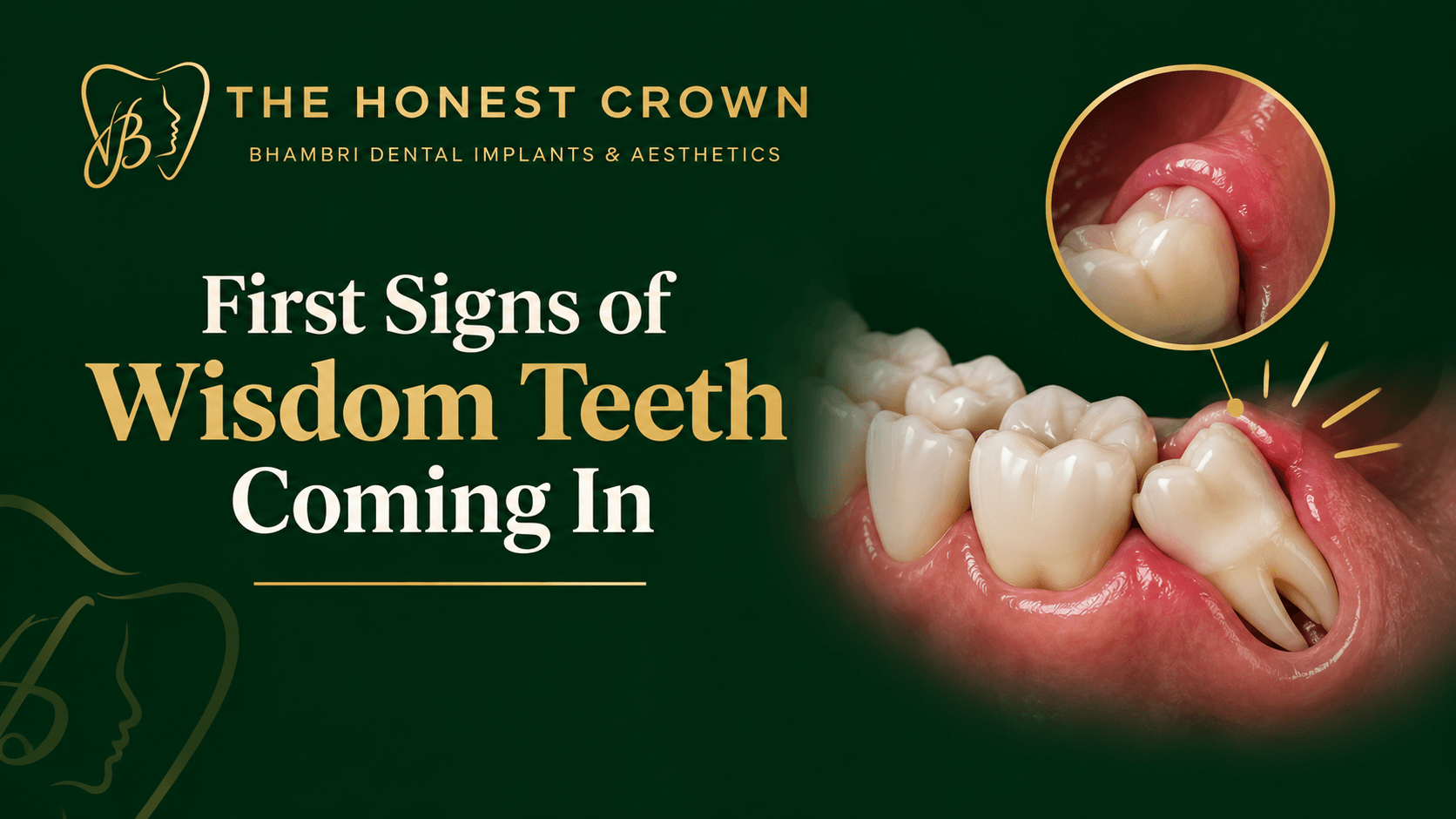
The first signs of wisdom teeth coming in are usually a dull ache at the back of the jaw, tender or swollen gums behind your last molars, and stiffness when you open wide. These third molars typically arrive in the late teens or early twenties, and for many people the process is mild. For others, it brings pain, swelling, or infection.
This guide covers the early signs, what is normal, what is not, and when to see a dentist so a small problem doesn’t become a bigger one.
When Do Wisdom Teeth Come In?
Wisdom teeth, also called third molars, are the last teeth to grow in. According to Cleveland Clinic, they usually break through the gums between ages 17 and 25, though the exact timing varies. You may notice symptoms months before a tooth becomes visible, since pressure builds under the gum first.
What Are the First Signs of Wisdom Teeth Coming In?
These are the first signs people notice, roughly in the order they tend to appear.
1. A Dull Ache or Pressure at the Back of the Jaw
One of the earliest signs is a dull, throbbing ache or pressure behind your last molars. It often comes and goes, and it can feel worse when you chew or clench your jaw.
2. Red, Swollen, or Tender Gums
The gum over an emerging tooth can look puffy and red and feel sore to the touch. Light bleeding when you brush the area is common. If the swelling doesn’t settle, it is worth distinguishing it from gum disease, which can look similar.
3. Jaw Stiffness or Trouble Opening Wide
Irritated gum tissue and tense jaw muscles can make it uncomfortable to open your mouth fully or to chew on that side.
4. A Bad Taste or Bad Breath
Food and bacteria can collect around a partly erupted tooth, leaving a taste or odor that brushing does not fix.
5. Headaches or Ear Pain
The nerves in your jaw, teeth, and ear are closely connected, so wisdom tooth pain can spread. Pain from impacted wisdom teeth can radiate through the jaw, face, and head, and unexplained headaches or ear pain deserve a dental exam.
6. A Visible Tooth Edge or Gum Flap
You may see or feel the edge of a tooth pushing through, or a small flap of gum covering part of it. That flap is where trouble often starts.
Normal Discomfort vs. a Warning Sign
Some soreness is part of the process. This table shows how to tell the difference.
| Normal While Teeth Come In | Warning Sign |
| Mild ache that comes and goes | Pain that keeps getting worse or does not ease |
| Slight gum tenderness | Swelling, pus, or a bump on the gum |
| Mild jaw stiffness | Trouble opening your mouth or swallowing |
| No fever | Fever, swollen glands, or a bad taste that keeps returning |
Symptoms that settle within a few days are less concerning. Pain that returns again and again usually means the tooth is stuck or infected.
Why Wisdom Teeth Cause Problems
Many mouths simply do not have enough room for third molars. When a tooth cannot come in properly, it becomes impacted. Mayo Clinic explains that wisdom teeth are hard to clean, which makes them more prone to decay and gum disease than other teeth, and that impacted teeth causing pain or other problems are usually removed.
Common problems include:
- Pericoronitis, an infection of the gum flap over a partly erupted tooth
- Decay in the wisdom tooth or the molar in front of it
- Gum disease around the back teeth
- Pressure or damage to the neighboring tooth
When to See a Dentist
Book a visit promptly if you notice any of these:
- Swelling in your cheek or jaw
- Fever or chills
- Pus or a bump on the gum
- Severe pain that over-the-counter relief does not ease
- Difficulty opening your mouth
- A bad taste that keeps coming back
A wisdom tooth infection can spread if it is ignored, and a tooth infection can become serious within days. If you have trouble breathing or swallowing, go to the nearest emergency room.
What to Do for Discomfort at Home
These steps can ease mild symptoms while you wait for an appointment:
- Rinse with warm salt water several times a day.
- Brush and floss gently around the area to remove trapped food.
- Take an over-the-counter pain reliever as directed on the label.
- Hold a cold compress against your cheek for 15 to 20 minutes if it is swollen.
- Choose soft foods until the area calms down.
Home care can ease symptoms, but it cannot fix an impacted tooth.
How Dentists Check Your Wisdom Teeth
A dentist examines the gums and takes an X-ray, which shows whether the teeth are growing straight, at an angle, or trapped under bone. Based on what it shows, they may monitor the teeth, treat an infection, or refer you for oral surgery if removal is the best option.
Do All Wisdom Teeth Need to Be Removed?
No. Teeth that are healthy, fully erupted, and easy to clean may not need to come out. Removal is usually recommended when a tooth is impacted, repeatedly infected, or harming nearby teeth. If removal is recommended, it helps to know what wisdom teeth extraction and recovery involve.
Frequently Asked Questions
How long does it take for a wisdom tooth to come in?
It varies widely. Some teeth break through over a few months, while others stay below the gum or never fully emerge.
Does it hurt when wisdom teeth come in?
Mild pressure or soreness is common. Severe or worsening pain is not normal and should be checked.
Can wisdom teeth come in without any pain?
Yes. Impacted wisdom teeth do not always cause symptoms, which is why X-rays during routine exams matter.
When should I get my wisdom teeth checked?
Your dentist can monitor them during regular exams. The late teens are a good time for X-rays that show how the teeth are developing.
Get Your Wisdom Teeth Checked in Livingston, NJ
At The Honest Crown, Dr. Vishal Bhambri examines your wisdom teeth, takes X-rays when needed, and explains your options before any work begins. If you notice any of the signs above, book a visit with a Livingston dentist or call (973) 821-0030.