
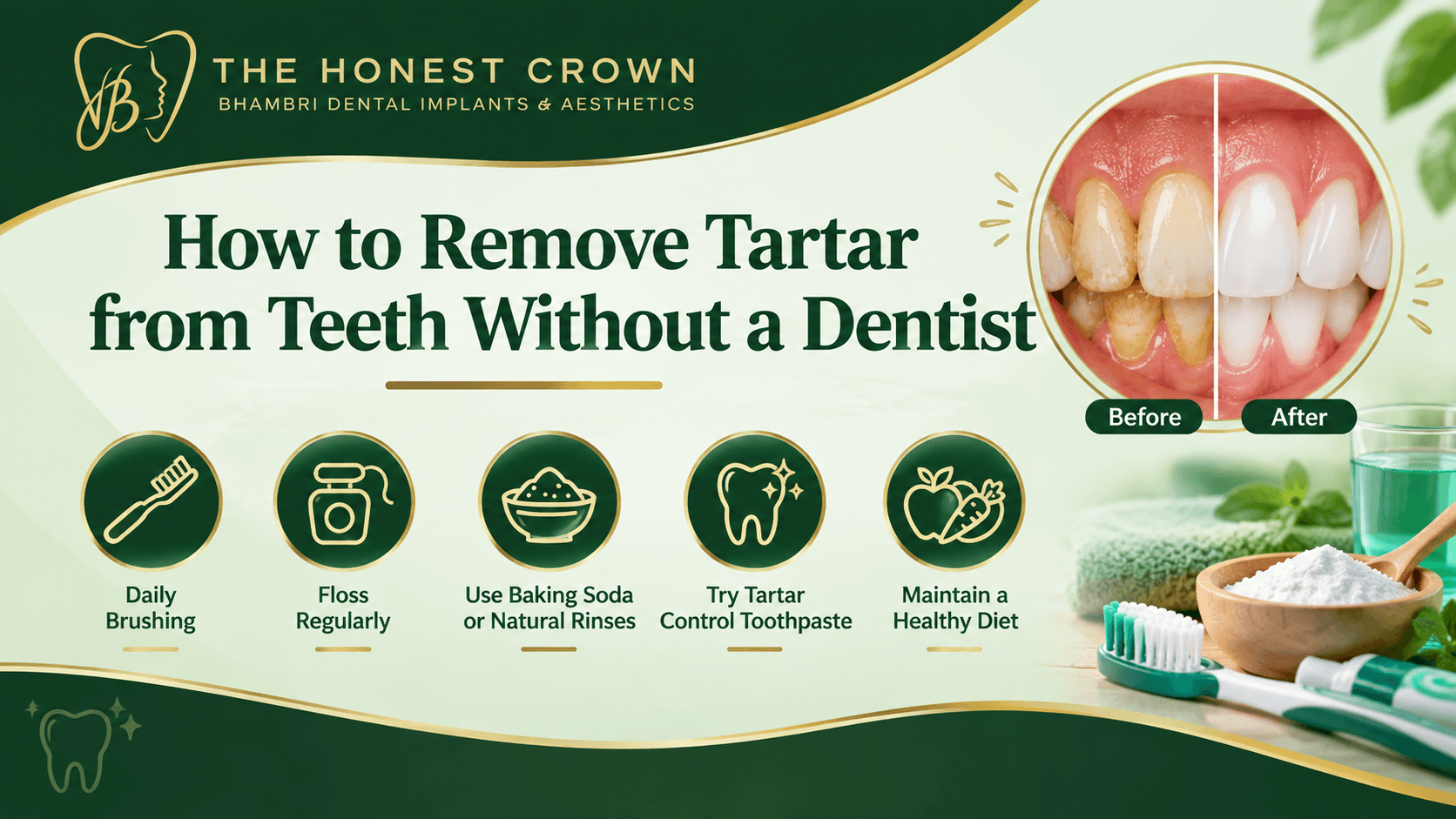
Once tartar has hardened onto your teeth, you cannot safely remove it at home. Brushing, flossing, and rinsing can stop new tartar from forming and keep plaque soft, but only a dentist or hygienist can scrape off tartar that has already set.
This guide explains what tartar is, what home care can and cannot do, which do-it-yourself tricks to avoid, and when it is time for a professional cleaning.
What Is Tartar and How Is It Different From Plaque?
Plaque is a soft, sticky film of bacteria that forms on your teeth every day. If it stays in place, it hardens into tartar, also called calculus. Mayo Clinic explains that tartar makes plaque harder to remove, creates a protective shield for bacteria, and irritates the gumline.
| Plaque | Tartar | |
| Texture | Soft, sticky film | Hard, rough crust |
| Color | Colorless or pale | Yellow, tan, or brown |
| Where it forms | All tooth surfaces | Often along the gumline and behind the lower front teeth |
| How to remove it | Brushing and flossing | Professional cleaning only |
Can You Remove Tartar at Home?
Not once it has hardened. The NIDCR states that only a professional cleaning by a dentist or hygienist can remove tartar.
You can remove soft plaque before it hardens and slow the buildup of new tartar. That is the real goal of any home routine, and it is more effective than any scraping tool.
Why DIY Tartar Removal Is Risky
Search online, and you will find plenty of home tartar removal hacks. Most of them do more harm than good.
Metal Scalers and Picks
Pointed tools are designed for trained hands. Used at home, they can scratch enamel, cut the gums, and push bacteria below the gumline. Tartar under the gumline is not visible or reachable.
Vinegar and Lemon Juice
Acids can soften enamel and irritate gum tissue, which makes teeth more sensitive and more prone to decay. They do not dissolve tartar safely.
Gritty Homemade Mixtures
Scrubbing with homemade abrasive pastes can wear down enamel and gums if overused, and it will not lift hardened tartar.
What Actually Helps: A Daily Routine to Slow Tartar Buildup
Brush Twice a Day for Two Minutes
Use a soft-bristled brush and fluoride toothpaste, angling the bristles toward the gumline. Good toothbrushing technique removes plaque before it hardens.
Clean Between Your Teeth Every Day
Floss, or use interdental brushes or a water flosser, to reach the spots a toothbrush misses. Plaque left between teeth is a common starting point for tartar.
Try a Tartar-Control Toothpaste
Some toothpastes contain ingredients such as zinc or pyrophosphates that can help limit new tartar formation. They will not remove tartar that is already there.
Use Tools That Make Cleaning Easier
An electric toothbrush or a water flosser can make it easier to reach the gumline and back teeth, especially if manual brushing is a struggle.
Cut Back on Sugary and Starchy Snacks
Plaque forms after you eat starches and sugars, so frequent snacking gives it more fuel. Rinsing with water after meals also helps.
Avoid Tobacco
Smoking and chewing tobacco raise your risk of gum disease, which tartar makes worse.
Signs You Have Tartar Buildup
You may have tartar if you notice:
- A rough or gritty feeling along the gumline
- A yellow or brown crust near the gums
- Bad breath that does not go away after brushing
- Gums that are red, swollen, or bleed easily
Tartar is often easier to feel with your tongue than to see, especially when it forms below the gumline.
What Happens If You Leave Tartar Alone?
Tartar irritates the gumline and gives bacteria a protected place to grow, which leads to gingivitis. Left untreated, gingivitis can progress to periodontitis, a more serious infection that can cause tooth loss.
Catching gum disease early gives you the best chance to reverse the damage, so don’t ignore bleeding or swollen gums.
How Dentists Remove Tartar
Dentists remove tartar with ultrasonic scalers and hand instruments, working both above and below the gumline. They then polish the teeth to smooth the surface so plaque has a harder time sticking.
For heavier buildup near the gums, a deeper cleaning may be needed. That is another reason to deal with tartar early, before it spreads below the gumline.
How Often Should You Get a Professional Cleaning?
Mayo Clinic notes that most people need a cleaning every 6 to 12 months. If you have risk factors such as dry mouth, smoking, or certain medicines, you may need cleanings more often.
A routine teeth cleaning removes tartar before it causes gum problems and also lets us check for cavities and early signs of gum disease.
Frequently Asked Questions
Can baking soda remove tartar?
Baking soda is a mild abrasive that can help with surface stains, but it cannot remove hardened tartar. Rubbing it hard can wear down enamel.
Can vinegar or lemon juice dissolve tartar?
No. Acids can erode enamel and irritate your gums without safely removing tartar.
How fast does tartar form?
Plaque can harden into tartar within days if it isn’t removed, which is why daily cleaning matters.
Will an electric toothbrush remove tartar?
An electric toothbrush can remove plaque well, but it cannot remove tartar that has already hardened.
Book a Tartar Cleaning in Livingston, NJ
At The Honest Crown, Dr. Vishal Bhambri examines your teeth and gums, removes tartar, and explains your options before any work begins. If you can feel rough buildup near your gums, book a visit with a dentist Livingston NJ, or call (973) 821-0030.