
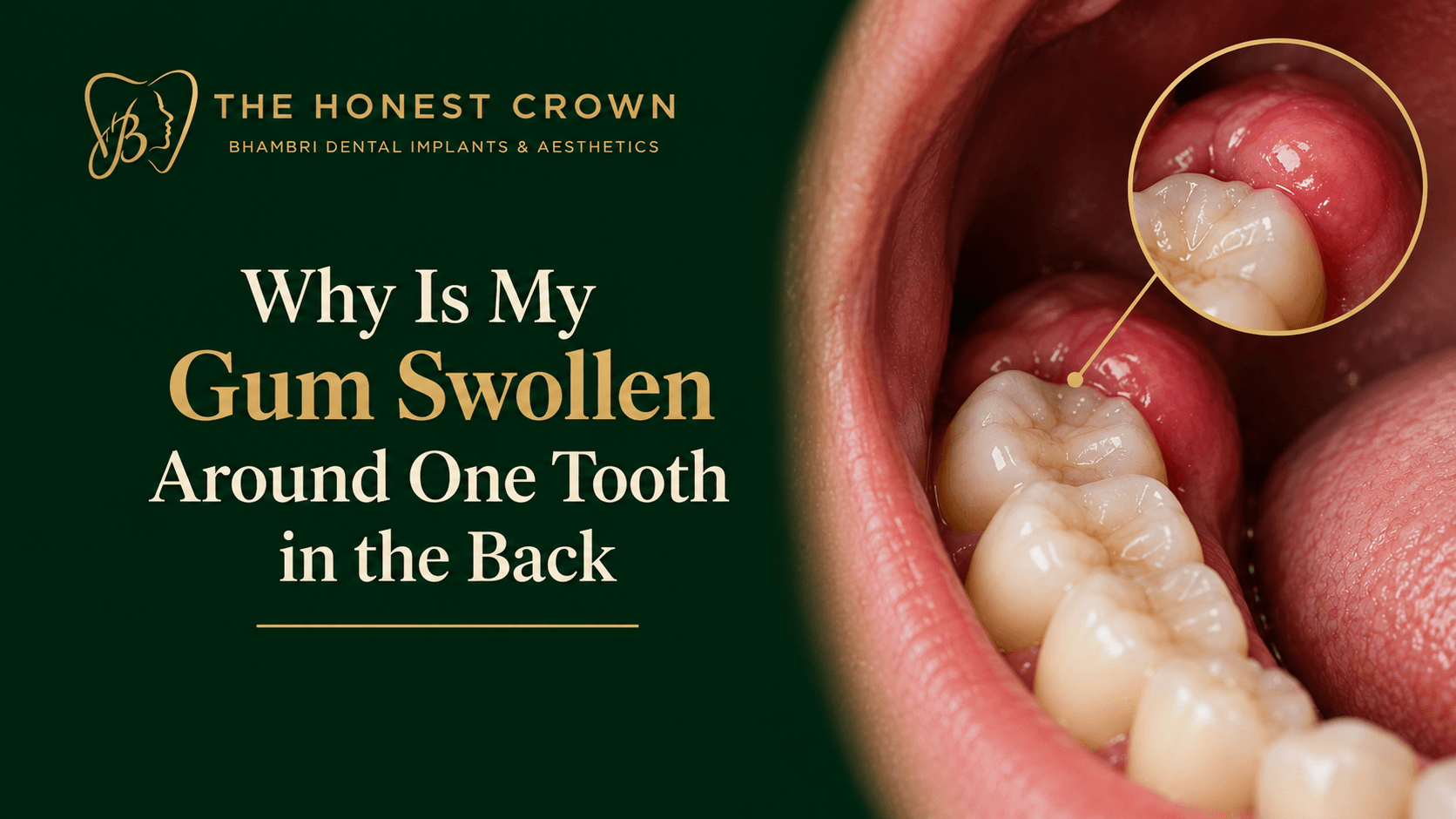
Swollen gums around a single back tooth usually point to local irritation or infection, not a problem with your whole mouth. Common causes include food or plaque trapped around the tooth, a partly erupted wisdom tooth, a gum infection, or an abscess. Back teeth are hard to clean and take the most chewing pressure, so trouble often starts there.
This guide explains the likely causes, how to tell them apart, what you can do today, and when swelling needs a dentist right away.
Quick Answer: Common Causes of a Swollen Gum Around One Back Tooth
| Cause | Typical Signs | How Urgent Is It? |
| Trapped food or plaque | Red, puffy gum near a tight spot between teeth; bleeds when flossed | Low. Usually settles with cleaning |
| Partly erupted wisdom tooth | Swelling at the very back of the jaw, bad taste, pain when closing | Moderate. See a dentist soon |
| Gum infection | Bleeding, bad breath, gums that look puffy or pulled away | Moderate. Book a visit |
| Tooth abscess | Throbbing pain, a pimple-like bump, swelling, fever | High. Same-day care |
| Cracked tooth, cavity, or failing filling | Pain when biting or with hot and cold | Moderate to high |
| Injury or irritation | Sore spot after a bite, hard food, or recent dental work | Low if it fades in a few days |
What Causes a Swollen Gum Around One Back Tooth?
Each cause has its own pattern, so the details of your swelling matter.
Trapped Food and Plaque
Back teeth have tight contacts and deep grooves where food packs in. When plaque and debris stay under the gumline for a day or two, the gum can swell, redden, and bleed when you touch it. This is the most common and easiest cause to fix.
A Partly Erupted Wisdom Tooth
If the swelling is at the back of your lower jaw, a wisdom tooth that has only partially come through is a prime suspect. A flap of gum can cover part of the tooth and trap bacteria underneath, a condition called pericoronitis.
According to Cleveland Clinic, partial impaction is the main cause, and symptoms include swelling, redness, and pain around the back teeth. It is most common in young adults.
Gum Infection
Gingivitis or periodontitis can start around a single tooth, especially one that is crowded, hard to reach, or has a rough filling edge. Typical signs include bleeding, bad breath, and puffy gums that look pulled away. Catching gum disease early makes it far easier to reverse.
Tooth Abscess
A pocket of pus at the root of a tooth, or in the gum beside it, can push up a swollen, tender bump. Mayo Clinic lists severe throbbing pain, pain when chewing, fever, and a foul taste as signs of an abscess. A sudden rush of salty fluid with pain relief can mean the abscess ruptured, but the infection is still there.
Cracked Tooth, Cavity, or Failing Filling
Decay or a crack can let bacteria reach the nerve and the tissue around the root, which irritates the gum. Pain when biting, or with hot and cold foods often comes with it.
Injury or Irritation
Biting a hard chip, a food particle that pokes the gum, a new crown that sits too high, or even brushing too hard can inflame one small area. These usually settle within a few days once you remove the irritant.
What to Do Today for a Swollen Gum
While you wait for an appointment, these steps can ease minor swelling:
- Rinse with warm salt water several times a day.
- Clean gently around the tooth with a soft brush and floss or an interdental brush to remove trapped debris.
- If the area is swollen, apply a cold compress to the outside of your cheek for 15 to 20 minutes at a time.
- Take an over-the-counter pain reliever as directed on the label.
- Chew on the opposite side until the area settles.
- Avoid tobacco, and never poke, squeeze, or try to pop a gum bump.
Home care can calm minor irritation, but it will not cure an infection.
When Swelling Is a Dental Emergency
Call a dentist the same day if the swollen gum comes with any of these:
- Swelling in your face, cheek, or jaw
- Fever or chills
- A pimple-like bump or pus on the gum
- Severe, throbbing pain that keeps you up at night
- Swelling that is spreading toward your eye or neck
If you notice swelling together with a fever or a bump on the gum, call an emergency dentist right away, since it may be an abscess that needs prompt treatment. If you have trouble breathing or swallowing, go to the nearest emergency room.
How Dentists Treat a Swollen Gum
Treatment depends on the cause, and a quick exam with X-rays usually pinpoints it:
- Professional cleaning: Removes trapped debris and tartar so the gum can settle.
- Wisdom tooth care: The dentist may clean under the gum flap, remove the flap, or recommend removing the wisdom tooth if it keeps causing infections. Cleveland Clinic notes that pericoronitis usually clears within a week or two once treated.
- Gum treatment: A deep cleaning and a home care plan for gum disease.
- Abscess treatment: Drainage, plus a root canal or extraction to remove the source of infection.
- Repairs: Fixing a cracked tooth, a cavity, or a rough filling.
- Antibiotics: Prescribed when an infection is spreading, alongside treatment of the cause.
Antibiotics alone rarely solve the problem because the cause, such as a trapped gum flap or a damaged tooth, remains.
How Long Does a Swollen Gum Last?
Minor irritation from trapped food often settles within a few days once the area is cleaned. Swelling that lasts longer than that, keeps coming back, or comes with pain, a bump, or a bad taste needs a dental exam. Recurring swelling in the same spot can point to a hidden tooth infection, and the pain may fade even though the infection remains.
How to Prevent Swelling Around Back Teeth
- Brush twice a day and clean between your teeth daily, paying extra attention to the back molars.
- Get regular checkups and cleanings so tartar and early decay are caught early.
- Have a dentist monitor a partly erupted wisdom tooth.
- Replace worn fillings and repair cracked teeth promptly.
- Avoid tobacco, which slows gum healing.
Frequently Asked Questions
Can a swollen gum go away on its own?
Mild swelling from trapped food or irritation can fade in a few days. Swelling caused by infection usually returns until the cause is treated.
Is a swollen gum around one tooth serious?
It can be. Swelling with fever, pus, a bump on the gum, or severe pain suggests infection and needs prompt dental care.
Should I pop the bump on my gum?
No. Squeezing or lancing it yourself can spread bacteria and worsen the infection. A dentist can drain it safely and treat the cause.
Can wisdom teeth cause swelling in older adults?
Yes. Pericoronitis is most common in young adults, but anyone with a partly erupted wisdom tooth can develop it.
Get a Swollen Gum Checked in Livingston, NJ
At The Honest Crown, Dr. Vishal Bhambri examines the area, takes X-rays when needed, and explains your treatment options before any work begins. If your gum stays swollen for more than a few days, book an appointment with a dentist in Livingston or call (973) 821-0030.