
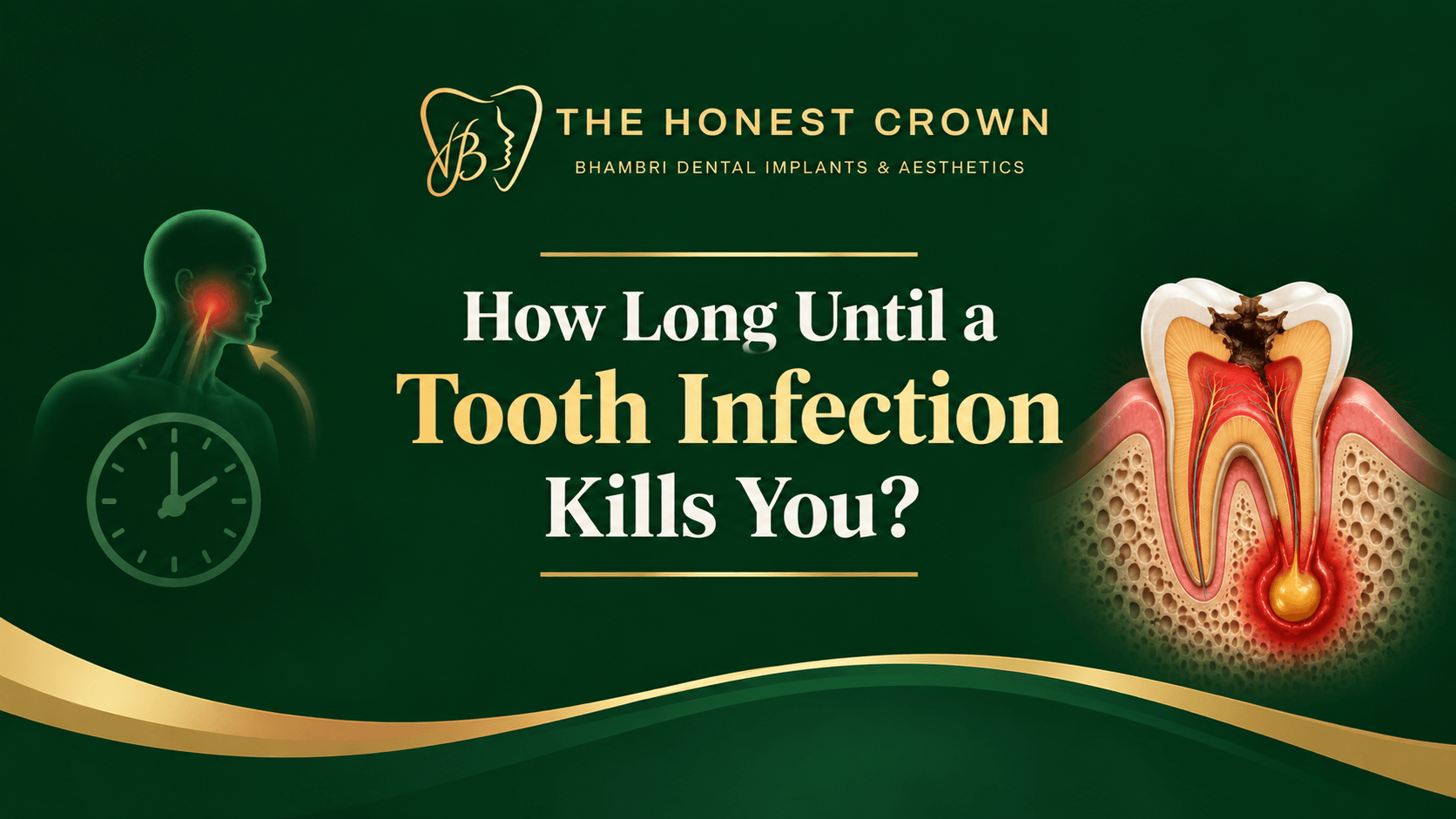
A tooth infection can become life-threatening, but it is rare. In a healthy adult, an untreated abscess often takes weeks or months to cause serious harm, while in some people it can spread within days. No one can predict which path an infection will take, so there is no safe amount of time to wait.
This guide, from a dental clinic in Livingston NJ, explains the timeline stage by stage, the warning signs that the infection is spreading, and when to call a dentist versus go to the emergency room.
Can a Tooth Infection Really Kill You?
Yes, but it is uncommon. A tooth infection, also called a dental abscess, is a pocket of pus caused by bacteria. It usually starts when bacteria reach the pulp, the inner part of the tooth, through deep decay, a crack, or earlier dental work. According to Mayo Clinic, a tooth abscess will not go away without treatment.
Modern dental care and antibiotics make deaths rare. The danger comes when you ignore an infection, and it spreads from the tooth to the jaw, neck, bloodstream, or brain.
How Long Does It Take for a Tooth Infection to Become Dangerous?
There is no exact number of days, because it depends on the type of infection, your immune system, and how quickly you get treated. This table shows the general pattern.
| Stage | Typical Timeframe | What Is Happening | What to Do |
| Early infection | Days to weeks | Bacteria reach the pulp, causing throbbing pain and sensitivity | Book a dental visit within a day or two |
| Abscess forms | Weeks to months | Pus collects at the root, and pain may flare up and calm down | Get treatment, since calm does not mean healed |
| Spreading infection | Days | Swelling in the face, jaw, or neck, often with fever | See a dentist the same day, or go to the ER if you cannot reach one |
| Critical stage | Hours to days | Trouble breathing or swallowing, rapid heartbeat, confusion | Call 911 or go to the ER immediately |
These timeframes are general ranges, not predictions. People with diabetes, a weakened immune system, or other chronic conditions, as well as older adults and smokers, can move through these stages faster. If you are in one of these groups, call a dentist at the first sign of tooth pain. Children can develop abscesses too, and a pediatric dentist can treat them.
How a Tooth Infection Spreads
Most dental infections follow the same path when left alone:
- Bacteria enter the tooth through decay, a crack, or a worn filling.
- The pulp becomes infected, which is often when the pain begins.
- Pus builds up and forms an abscess at the root.
- The infection moves into the jawbone and the soft tissues of the face and neck.
- In rare cases, bacteria reach the bloodstream.
Advanced gum disease can also cause an abscess in the gum tissue. Each stage is harder to treat than the last.
Warning Signs the Infection Is Spreading
A toothache should always be checked, but these symptoms mean the infection may be moving beyond the tooth:
- Fever or chills
- Swelling in the face, jaw, or neck
- Swollen, tender lymph nodes under the jaw
- Swelling that is moving toward the eye
- Pain or swelling at the back of the jaw, which can signal an infected wisdom tooth
- Difficulty swallowing or opening your mouth fully
- Rapid heartbeat, confusion, or extreme fatigue
Trouble breathing or swallowing is an emergency. Call 911 or go to the nearest ER.
What Happens If a Tooth Infection Is Ignored?
1. Sepsis
Sepsis is the body’s extreme reaction to an infection, and it can damage organs throughout the body. The CDC treats it as a medical emergency that needs immediate hospital care, and it can progress quickly.
2. Ludwig’s Angina
This rare infection affects the floor of the mouth and the neck. Swelling can build fast under the tongue and jaw, making it hard to swallow and, in severe cases, to breathe.
3. Spread to the Brain or Heart
Very rarely, bacteria from a tooth infection can reach the brain or the lining of the heart. Both complications are dangerous and require hospital treatment.
Why Pain That Suddenly Stops Is Not Good News
If an abscess ruptures, a sudden rush of foul, salty fluid may be followed by pain relief. That can make it seem like the problem is gone, but you still need treatment, such as a root canal or a tooth extraction. The same can happen when the nerve inside the tooth has died, and antibiotics can quiet symptoms without removing the cause.
Dentist or Emergency Room?
Knowing where to go can save valuable time.
| Call a Dentist Today If You Have | Go to the ER or Call 911 If You Have |
| A toothache that keeps coming back | Trouble breathing or swallowing |
| Swelling near a tooth or on the gum | Swelling spreading to the eye, neck, or under the tongue |
| A pimple-like bump on the gum | Fever together with facial swelling |
| Pain when chewing or biting | Confusion, rapid heartbeat, or severe weakness |
| A bad taste that does not clear up | Symptoms that are getting worse quickly |
If you are in Livingston and unsure, our emergency dentist team can assess the tooth and tell you how urgent it is. If you cannot reach a dentist and have a fever with facial swelling, go to the ER.
What to Do Until You See a Dentist
Home care eases symptoms, but it does not treat the infection:
- Rinse gently with warm salt water.
- Take over-the-counter pain relievers as directed on the label.
- Do not try to pop or drain a bump on the gum.
Knowing the first steps in a dental emergency helps you act quickly and stay calm.
How Dentists Treat a Tooth Infection
The goal is to remove the source of the infection, not just manage symptoms. Depending on your case, treatment may include:
- Root canal therapy: Infected tissue inside the tooth is removed, and the tooth is cleaned, sealed, and protected, often with a crown.
- Abscess drainage: Pus is drained to relieve pressure and pain.
- Antibiotics: These are used when the infection has spread, or you are at higher risk. They support treatment but do not replace it.
- Tooth extraction: If the tooth is too damaged to save, removing it clears the infection.
- Tooth replacement: Implants, bridges, or partials can restore the space after an extraction.
How to Prevent a Tooth Infection
- Get a professional cleaning and exam twice a year, since dentists remove tartar that brushing cannot reach.
- Treat cavities as soon as they are found.
- Do not ignore tooth pain, even if it comes and goes.
- Get chipped or cracked teeth checked promptly.
- Brush twice a day, floss daily, and keep conditions like diabetes well managed.
Frequently Asked Questions
Can a tooth infection go away on its own?
No. The pain may come and go, but the source, such as decay or a crack, stays in the tooth until a dentist treats it.
How long can you leave a tooth infection untreated?
There is no safe amount of time. Some abscesses stay in one place for weeks, while others spread within days. Visit a dentist within a day or two of the first symptoms, and the same day if you have swelling or fever.
Do antibiotics alone cure a tooth infection?
Antibiotics can slow bacterial spread, but they do not remove the cause. Most infections return unless the tooth is treated with a procedure such as a root canal or an extraction.
Is it better to treat an infected tooth early?
Yes. Early treatment is usually simpler and may save the tooth. Cost is a common concern, and reviewing typical root canal costs can help you plan, but waiting increases risk.
Get Prompt Dental Care in Livingston, NJ
At The Honest Crown, Dr. Vishal Bhambri evaluates tooth pain, finds the source of the infection, and explains your treatment options before any work begins.
Book your appointment or call (973) 821-0030. If you ever have trouble breathing or swallowing, go to the nearest emergency room.